Chainsaw Chain Types: Full Chisel vs Semi-Chisel vs Skip Tooth Explained
Jump to section
Choosing the right chainsaw chain can mean the difference between smooth, fast cuts and a frustrating, slow job. The three main chainsaw chain types are full chisel chains (cut fastest but dull quickly), semi-chisel chains (stay sharp longer, better in dirty conditions), and skip tooth chains (reduce drag for large wood).
Each type has strengths for different cutting tasks and conditions. The chain’s arrangement, size, and features all play a role in how well it performs.
A logger working with clean hardwood needs a different setup than someone cutting dirty firewood or doing chainsaw milling. It’s not just about tooth shape—there’s a lot more under the surface.
This guide breaks down chainsaw chain types in simple terms. It covers tooth profiles, chain arrangements, sizing, and how to pick the right chain for your saw and needs.
Whether you’re new to chainsaws or looking to upgrade, understanding these differences helps you work safer and get the job done better.
Cutter Tooth Profiles and Their Impact
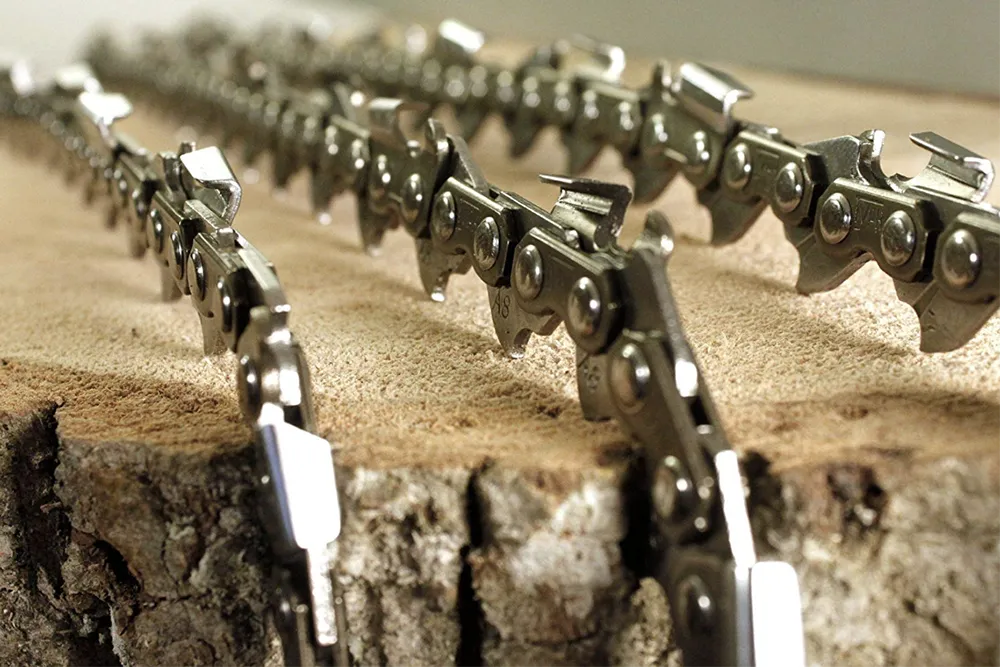
The shape of a chainsaw tooth affects cutting speed, edge retention, and safety. Full chisel chains have sharp square corners and cut fast but dull quickly.
Semi-chisel chains have rounded edges, so they stay sharp longer, especially in tough conditions.
Full Chisel Tooth Design and Performance
Full-chisel chains use square-cornered teeth with sharp 90-degree angles. This aggressive edge slices through wood fibers with very little resistance.
The sharp corners help full chisel chains cut hardwood fast in clean conditions. That’s why professional loggers reach for them when speed matters.
But those sharp corners are fragile. If you hit dirt, sand, or frozen wood, the edges chip and dull fast.
These chains need more frequent sharpening if you work in dirty environments. Honestly, it can get annoying.
Some folks use carbide-tipped chain versions of full chisel for extra durability and speed in tough conditions.
Semi-Chisel Tooth Design and Versatility
Semi-chisel chains have rounded corners instead of sharp ones. The rounded profile spreads impact forces across more of the tooth, making it tougher.
Semi-chisel cutters hold their edge longer when cutting dirty, frozen, or sandy wood. They’re also a lot easier to sharpen—just grab a round file and you’re good to go.
This makes semi-chisel chains a practical choice for homeowners and pros who deal with mixed conditions. They do cut a bit slower than full chisel, though, since the rounded edge creates more resistance.
The upside? You spend less time sharpening and more time actually cutting. Some people call these chipper chains because of their chip-clearing design.
Comparing Tooth Profiles: Speed, Durability, and Kickback Risk
| Factor | Full Chisel | Semi-Chisel |
| Cutting Speed | Fastest | Moderate |
| Edge Retention | Poor in dirty conditions | Excellent |
| Best Use | Clean hardwood | General purpose, abrasive conditions |
| Kickback Risk | Higher | Lower |
| Sharpening | Requires precision | Easier with round file |
Full chisel chains deliver top speed but need clean wood to really shine. Their aggressive teeth also mean a higher kickback risk, since they grab the wood so forcefully.
Semi-chisel chains are safer and stay sharp longer, especially if you cut dirty firewood, storm debris, or frozen logs.
Chain Arrangements: Skip, Semi Skip, and Full Component
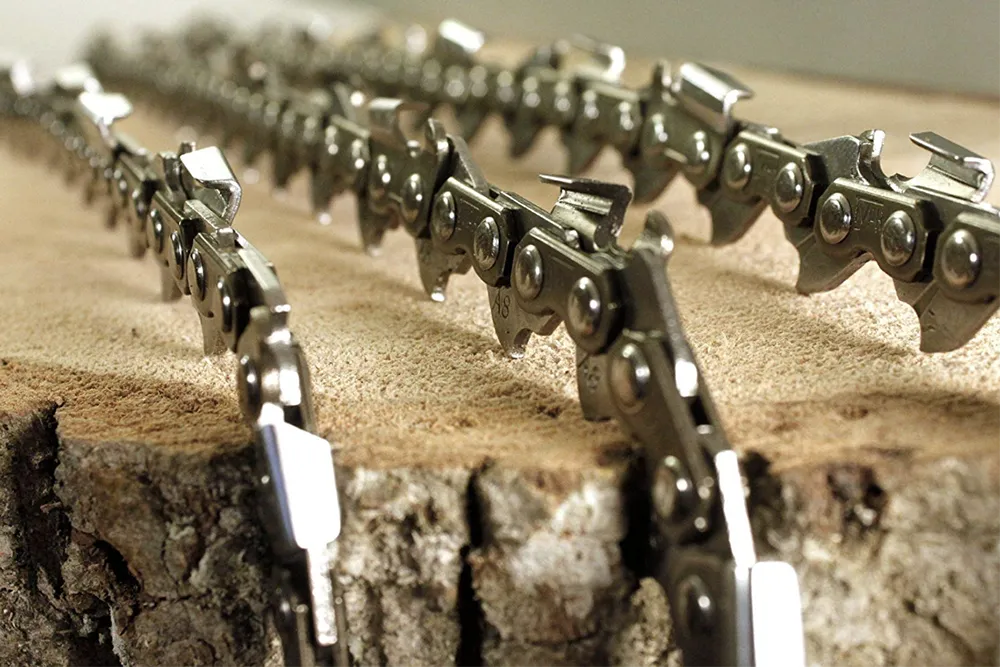
Chain arrangement is all about how the cutting teeth are spaced along the chain. Skip chains have fewer teeth with bigger gaps, while full component chains pack teeth close together.
Semi skip chains fall somewhere in the middle.
Skip Chain: Application and Benefits
Skip chains have the widest spacing—two drive links between each cutter. This design creates less drag on the motor, so it’s great for longer bars (24 inches or more) and big cutting jobs.
Since there are fewer teeth, the engine doesn’t work as hard. Skip chains really shine on large logs and heavy-duty tasks where you want efficiency.
Key advantages:
- Better for bars over 24 inches
- Less strain on smaller engines
- Faster cutting on large, clean softwood
- Less sharpening needed (fewer teeth)
The trade-off? The cut quality is rougher. Skip chains take bigger bites, so you won’t get a smooth finish.
Semi Skip and Full Component Chains: Use Cases
Semi skip chains mix it up—some teeth are spaced with one tie strap, some with two. This gives you more teeth than a skip chain but still keeps things efficient.
Full component chains (also called standard or full complement) put a cutter on every other drive link. That means the maximum number of teeth, which gives you the smoothest cuts.
Semi skip chains are great for:
- Medium bars (18-24 inches)
- General cutting
- Mixed wood types
Full component chains work best for:
- Short bars (under 18 inches)
- Precision work
- Hardwoods
- When you need a smooth finish
The downside: more teeth mean more drag and more sharpening.
Ripping Chains and Specialized Arrangements
Ripping chains are built for cutting along the grain, not across it. Their cutters are filed at a shallower angle (usually 10 degrees, not 30).
That change makes the chain scrape instead of chip, producing sawdust and giving you a smoother cut—perfect for milling lumber.
Most ripping chains use a full component setup to keep as many cutters on the wood as possible. You get a flat, even surface, which is exactly what you want for milling.
Ripping chains are mainly for:
- Chainsaw milling with special attachments
- Making planks or beams from logs
- Woodworking projects needing clean lumber
Standard chains can cut with the grain, but they leave rough, torn surfaces—not great for milling.
Low-Profile, Narrow Kerf, and Specialty Chains
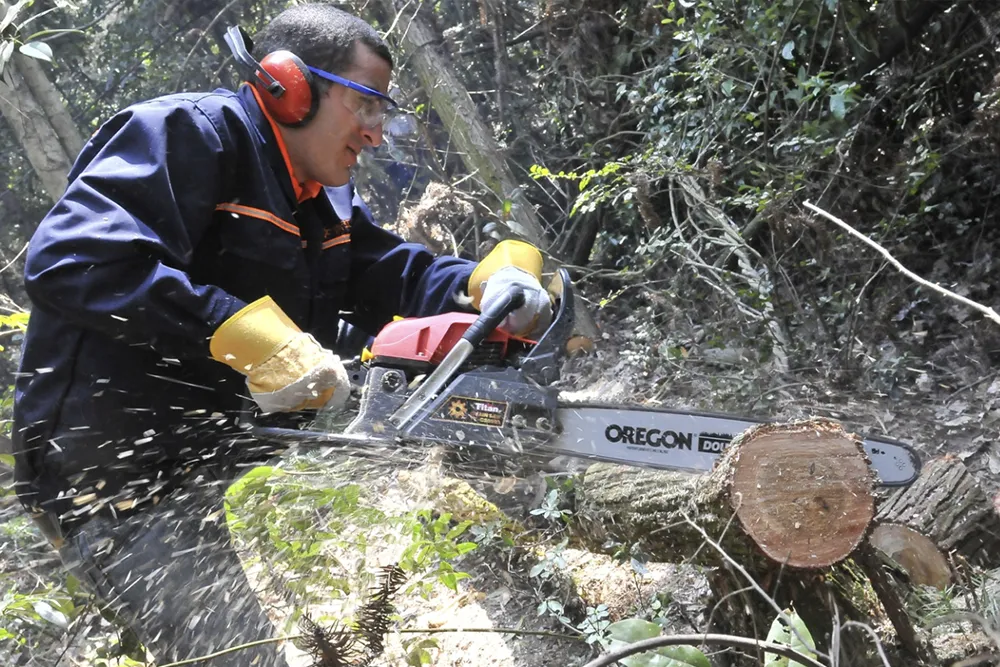
There are also specialty chains for specific jobs. Low-profile chains focus on safety, while narrow kerf chains make cutting easier for smaller saws.
Low-Profile Chains: Safety and Efficiency
Low-profile chains have shorter teeth and an overall lower height. This design really cuts down on kickback, which is great if you’re a homeowner or not using a chainsaw every day.
They need less power, so they’re perfect for lightweight and electric saws. You can work longer without getting worn out.
These chains work best on softer woods and for yard work. They’re slower than full chisel chains, but you get better control and peace of mind.
Low-profile chains usually come in .325 inch or 3/8 inch low-profile pitch. Safety is the main focus, and many have extra low-kickback features.
Narrow Kerf Chains: Lightweight Cutting
Narrow kerf chains cut a thinner path through wood. That means you need less power per cut, so they’re ideal for battery-powered or small gas saws.
They’re great for limbing, pruning, and cutting smaller wood. You’ll notice faster cuts and longer battery life on cordless saws.
Since they remove less wood, you get less sawdust and waste. They’re efficient, but they can bind more easily in big cuts or if the bar pinches.
Choosing Between Standard and Specialty Chains
Standard chains work for most jobs and offer versatility. Specialty chains are better for certain situations.
Go with low-profile chains if you’re:
- New to chainsaws
- Working around the house
- Using a lightweight or electric saw
- Putting safety first
Pick narrow kerf chains if you’re:
- Using a battery-powered saw
- Cutting small wood
- Doing detailed trimming
- Wanting to maximize cordless runtime
Always check if your saw can handle these specialty chains before buying. Most newer consumer saws fit them, but it’s worth double-checking.
Key Chain Specifications: Pitch, Gauge, and Length
Three measurements matter for chain fit: pitch, gauge, and length. All three need to match your saw and bar exactly.
Understanding Chain Pitch and Guide Bar Compatibility
Chain pitch is the distance between three rivets, divided by two. It tells you the chain’s size.
Common pitches: 1/4″, .325″, .375″ (3/8″), and .404″. Your guide bar will have the pitch stamped on it—always match it to your chain.
If the pitch doesn’t match, the chain won’t fit the bar’s nose sprocket or the saw’s drive sprocket. That’s a recipe for frustration.
Most homeowner saws use .325″ or 3/8″ low-profile pitch. Pros often use 3/8″ or .404″. Smaller pitch means smoother, slower cuts; bigger pitch cuts faster through thick wood.
Check your guide bar for the pitch spec before buying a chain.
Chain Gauge and the Importance of Drive Links
Chain gauge is the thickness of the drive link—the part that fits in the bar groove. Gauges usually range from .043″ to .063″.
Most common gauges:
- .050″ – Most homeowner/farm saws
- .058″ – Some pro saws
- .063″ – Larger pro saws
The bar groove width must match the chain gauge. Too thin? The chain wobbles. Too thick? It won’t fit at all.
Drive links are the bottom parts that ride in the groove. Every chain needs a specific number of drive links for a given bar length.
A 16″ bar might need 56, 60, or 67 drive links, depending on pitch. The count has to be exact—even one link off, and the chain won’t fit right.
Determining Chain Length and Bar Length Matching
Bar length and chain length work together, but they’re not the same thing. Bar length is the cutting length measured from the front of the saw to the tip of the bar.
Chain length depends on both bar length and chain pitch. Two bars of the same length might need different chain lengths if they use different pitch sizes.
To get the right chain length, count the drive links on the original chain. This number shows up on the chain packaging as the third specification, after pitch and gauge.
A typical format looks like this: 3/8″ pitch, .050″ gauge, 72 drive links. Some manufacturers stamp the drive link count on the guide bar, but a lot don’t.
Don’t guess chain length based on bar length alone. Always check the exact drive link count for your specific bar and pitch combo.
Selecting the Right Chainsaw Chain for Your Needs
The right chain depends on the wood, cutting conditions, and safety needs. Full chisel chains work best for clean softwood. Semi-chisel handles dirty or frozen conditions. Skip tooth chains reduce drag in big cuts.
Practical Scenarios: Hardwood, Softwood, and Firewood
Softwood cutting favors full chisel chains because the sharp top plate splits wood fibers fast. Pine, fir, and spruce cut cleanly with this aggressive design.
The chain stays sharp longer if you work in clean conditions without dirt or sand.
Hardwood and frozen wood really need semi-chisel chains. Oak, maple, and hickory dull sharp corners fast. The rounded cutter profile holds an edge better than full chisel in tough materials.
Semi-chisel also works well for firewood, especially when there’s dirt near ground level.
Large diameter logs benefit from skip tooth chains. These have fewer cutters along the bar, which reduces drag and lets smaller saws handle bigger cuts.
Each depth gauge clears more sawdust per pass. This setup works for both hardwood and softwood when you’re dealing with thick rounds or trunks over 12 inches.
Safety and Maintenance Considerations
Low-profile chains are the safest bet for homeowners and casual users. The shorter cutter height and lower depth gauge settings lower kickback risk.
These chains cut slower but give you more control.
Chain maintenance starts with matching the file size to the cutter type. Full chisel needs precise sharpening to keep the square corner, while semi-chisel is a bit more forgiving.
Adjust the depth gauge every 3-5 sharpenings to keep the chain cutting right.
Worn chains show clear warning signs. If cutters have rounded or damaged top plates, it’s time to replace—not sharpen. Chains that pull to one side mean the cutter lengths are uneven.
Regular tension checks help prevent safety issues and bar damage.
Expert Tips on Matching Chain Type to Application
Professional loggers swap chains based on daily conditions. Full chisel goes on saws for limbing and bucking clean logs at the landing.
Semi-chisel gets the nod for felling and delimbing in the woods where dirt is everywhere.
Chain and saw power must match. Aggressive full chisel chains on small saws bog down and cut slow. The engine needs enough torque to drive sharp cutters through wood.
Homeowner saws under 50cc usually do better with semi-chisel or low-profile chains.
Temperature matters, too. Frozen wood in winter dulls full chisel chains fast. Semi-chisel holds up better in the cold.
Summer cutting in dry, dusty places also favors the rounded cutter design, which resists abrasive wear.
FAQs
What is the difference between full chisel and semi-chisel chainsaw chains?
Full chisel chains have square-cornered teeth that create an aggressive cutting edge. The sharp corners let the chain slice through wood fibers fast.
Semi-chisel chains use rounded corners on their teeth. This makes them less aggressive, but they’re more durable when cutting through dirty or abrasive materials.
The tooth shape affects speed and edge retention. Full chisel chains cut faster in clean wood but lose sharpness quickly if they hit dirt or debris.
When should you choose a full chisel chain over a semi-chisel chain?
Full chisel chains are best for cutting clean softwood where you want maximum speed. Pros often use them with freshly cut timber in controlled conditions.
Semi-chisel chains work better for hardwood, frozen wood, or dirty logs. They keep their edge longer when conditions aren’t ideal.
A full chisel chain makes sense if the wood is clean and you don’t mind sharpening often. Semi-chisel needs less frequent sharpening and handles tough conditions better.
Why would you use a skip-tooth chainsaw chain instead of a standard sequence chain?
Skip-tooth chains have fewer cutters spaced along the chain, which lightens the load on the saw’s motor. This design shines with longer bars (24 inches or more) or smaller saws.
The wider spacing lets more chips clear from the cut. That keeps the chain from clogging when you’re cutting big logs or softwood that makes a lot of sawdust.
Skip-tooth chains cut a bit slower than full-sequence chains but need less power. They let smaller saws handle longer bars.
Which chain type holds an edge longer when cutting dirty or frozen wood?
Semi-chisel chains keep their sharpness longer in dirty or frozen wood compared to full chisel. The rounded corners resist damage from grit and debris better than sharp square corners.
Full chisel chains dull fast when they hit dirt, sand, or frozen fibers. The square corners chip and roll over more easily.
A semi-chisel chain can work several times longer between sharpenings in dirty environments. That’s a big plus for land clearing, storm cleanup, or cutting logs that have been on the ground.
How do full chisel, semi-chisel, and skip-tooth chains compare for cutting speed and smoothness?
Full chisel chains give you the fastest speed in clean wood. They remove material aggressively and finish cuts fast.
Semi-chisel chains cut a bit slower but make smoother cuts with less vibration. The rounded teeth offer more control, which a lot of users appreciate.
Skip-tooth chains cut slower than full-sequence chains of either type because they have fewer cutting teeth in the wood. Still, they keep a steady speed with less strain on the saw, especially with longer bars.
How do you match chain type to bar length, saw power, and wood diameter?
Bar length and saw power really shape which chain setups will actually work. If your saw has a bar under 20 inches and enough power, you can usually go with a full-sequence full chisel or semi-chisel chain for top cutting speed.
Once you get into longer bars—say, 24 inches or more—you’ll probably want a skip-tooth chain, especially if your saw has less than 60cc displacement. The skip pattern helps keep the motor from bogging down during those long, demanding cuts.
Wood diameter changes things, too. Big hardwood logs? Semi-chisel chains are a smart pick since they don’t dull as quickly. But if you’re cutting clean softwood, a full chisel chain can really show off its speed.
Want to Know More About Our Products?
View All Products Now