Serra de vara vs. motosserra: qual escolher para o seu jardim?
Saltar para a secção
Escolher a ferramenta de corte certa pode facilitar bastante o trabalho no jardim — e torná-lo muito mais seguro também. Tanto as motosserras como as serras de vara cortam madeira, mas cada uma destas ferramentas destaca-se em situações diferentes.
Então, em que é que cada ferramenta se destaca? Compreender isso irá ajudá-lo a escolher a mais adequada às suas necessidades.
Uma motosserra destina-se a cortar madeira grossa e a abater árvores ao nível do solo, enquanto uma serra de vara aumenta o seu alcance para podar ramos altos sem precisar de uma escada. A maioria das pessoas utiliza uma serra de vara para podar ramos altos e uma motosserra para cortar troncos ou abater árvores. Por vezes, acaba por ser necessário utilizar ambas.
Este guia explica como cada ferramenta funciona e quando a utilizar. Também encontrará informações sobre os tipos de ferramentas, o equipamento de segurança e os cuidados a ter com o equipamento.
Definição de motosserras e serras de vara
Tanto as motosserras como as serras de vara utilizam uma corrente e uma barra para cortar madeira. No entanto, distinguem-se pelo seu design e alcance.
O que é uma motosserra?
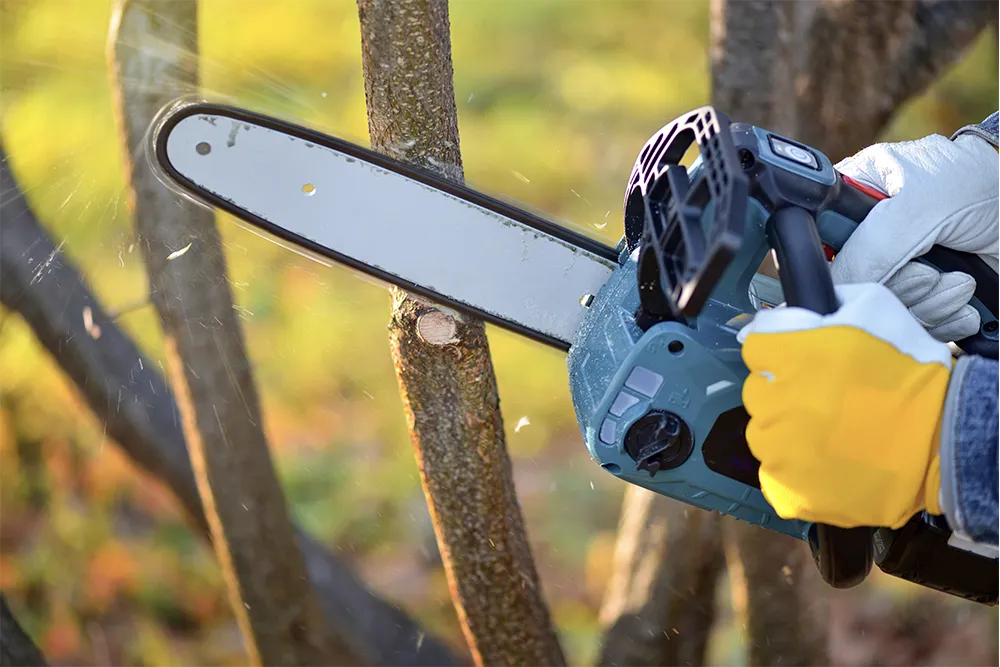
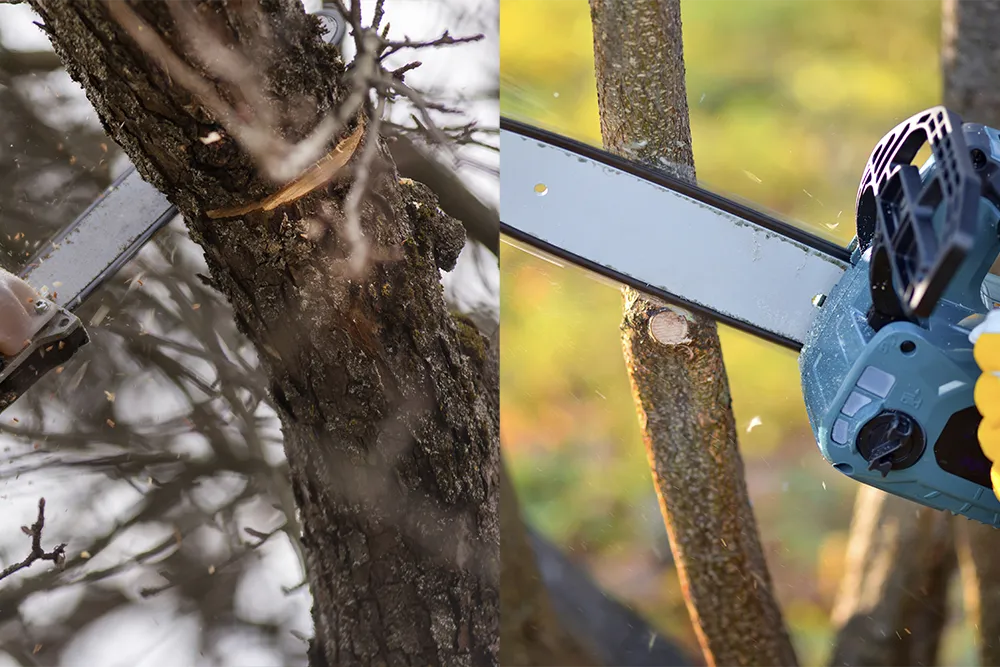
Uma motosserra é uma ferramenta elétrica portátil com uma corrente rotativa e dentes afiados numa barra-guia. Utiliza-se junto ao corpo, pelo que é ideal para cortes ao nível do solo ou a curta distância.
As motosserras estão disponíveis em a gás, os modelos elétricos com fio e os que funcionam a bateria. As versões a gasolina oferecem maior potência para trabalhos mais exigentes. Os modelos elétricos são mais silenciosos e requerem menos manutenção.
A maioria das motosserras tem barras-guia entre 12 e 20 polegadas. São excelentes para lenha, remoção de árvores e ramos grossos.
Segure a motosserra com ambas as mãos. Use sempre luvas, proteção ocular e calças de proteção — não economize na segurança.
O que é uma serra de vara?
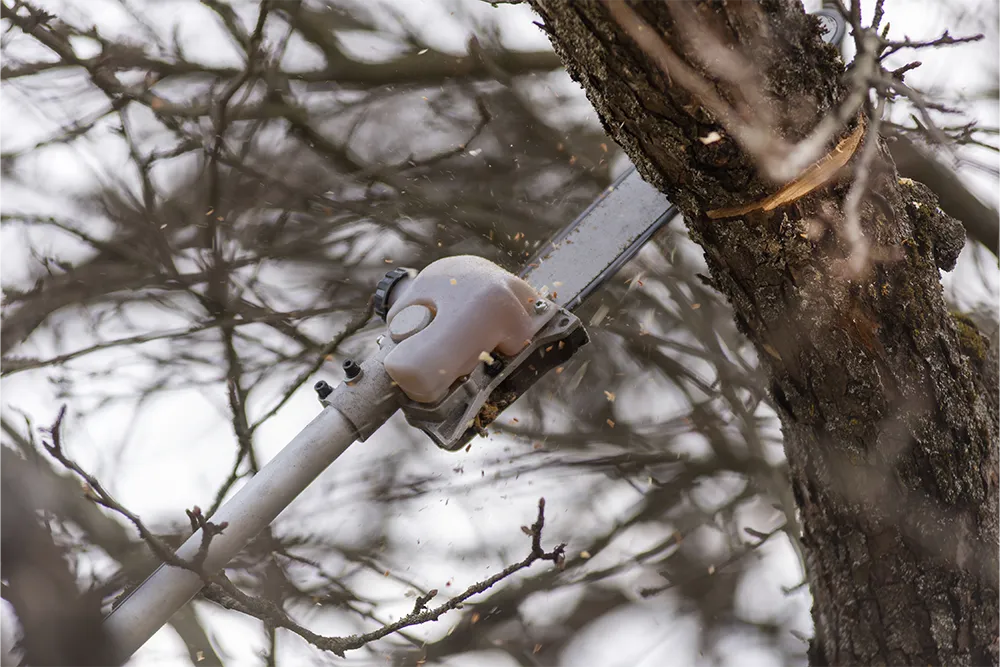
Uma serra de vara é, basicamente, um pequeno cabeçote de motosserra na extremidade de uma vara comprida. A o poste permite consegues alcançar os ramos mais altos sem teres de trepar.
A maioria mede entre 6 e 15 pés. Algumas utilizam varas telescópicas para ajuste da altura. Isto permite-lhe manter-se no chão enquanto aparar ramos que se estendem por cima.
As serras de vara estão disponíveis em modelos manuais, elétricos ou a gasolina. As manuais utilizam uma lâmina e a força muscular. As versões motorizadas funcionam como uma pequena motosserra, mas com menos potência.
A cabeça de corte é mais pequena, normalmente com uma barra de 8 a 10 polegadas. As serras de vara são adequadas para podas leves e ramos com até 6 polegadas de espessura.
Principais semelhanças
Ambas as ferramentas utilizam um sistema de corrente e guia quando estão em funcionamento. A corrente gira à volta da guia, cortando a madeira.
Para ambas as atividades, é necessário equipamento de segurança e uma boa técnica. É imprescindível usar proteção ocular e luvas.
O recuo é um risco associado a qualquer uma das ferramentas, pelo que é necessário saber como lidar com ele. Ambas são mais adequadas para madeira seca e morta do que para ramos verdes e cheios de seiva.
Tipos e fontes de energia
As motosserras e as serras de vara estão disponíveis em diferentes tipos e com diferentes fontes de energia, o que influencia o seu desempenho e a quantidade de trabalho que exigem. A melhor escolha depende do seu jardim e da forma como gosta de trabalhar.
Tipos de motosserras
As motosserras dividem-se em três tipos principais. Motosserras a gasolina são as que oferecem maior potência para troncos grossos e madeira dura. São ideais para trabalhos de grande envergadura, mas requerem combustível e manutenção regular.
As motosserras elétricas ligam-se à tomada, o que as torna ideais para trabalhos de pequena a média dimensão. São mais silenciosas e arrancam facilmente, mas o cabo obriga-o a ficar perto de uma tomada.
Motosserras a bateria são sem fios e mais ecológicas. As baterias modernas fornecem energia suficiente para a maioria das tarefas domésticas, como a poda e a limpeza após tempestades. Têm um custo inicial mais elevado, mas poupam-lhe a compra de combustível.
Tipos de serras de vara
As serras de vara manuais utilizam uma lâmina curva e não necessitam de energia elétrica. São baratas e simples, mas, passado algum tempo, os braços vão começar a sentir o cansaço.
Serras elétricas para postes Basta ligá-los à tomada e fornecem potência constante para aparar em alturas elevadas. São mais leves do que os modelos a gasolina, mas o cabo pode atrapalhar.
Serras de poste a gasolina são as mais resistentes para ramos grossos acima da cabeça. Os paisagistas gostam delas para trabalhos difíceis, mas são mais pesadas e cansativas de utilizar acima da cabeça.
Serras de vara sem fio Funcionam a pilhas e combinam potência com liberdade de movimentos. A maioria dos trabalhos de aparagem doméstica é canja para estes aparelhos.
Opções manuais, elétricas, a gás e a bateria
Ferramentas manuais Exigem esforço físico, mas poupam em combustível, ruído e manutenção. São ideais para aparar ocasionalmente e de forma leve.
Modelos elétricos Só precisa de uma tomada, mas pode funcionar o tempo que quiser. Sem combustível, sem recarga, basta ligar à tomada e partir.
Ferramentas a gás Proporciona potência máxima em qualquer situação, mas vais ter de dedicar algum tempo à manutenção do óleo, dos filtros e das velas de ignição.
Opções alimentadas a bateria ficam a meio. A duração depende da bateria, normalmente entre 30 e 90 minutos. Se tiver um jardim grande, é útil ter baterias extra.
Desempenho, capacidade de corte e cenários de utilização ideais
As motosserras oferecem uma potência bruta ideal para cortar madeira grossa e remover árvores ao nível do solo. As serras de vara permitem-lhe alcançar ramos altos com segurança — sem necessidade de escadas.
Poda em altura vs. corte ao nível do solo
As serras de vara são concebidas para a poda em altura. Estendem-se até 15 pés, permitindo-lhe podar ramos altos a partir do solo. Isso torna-as perfeitas para copas de árvores e para remover ramos junto a cabos elétricos.
As motosserras funcionam melhor ao nível do solo ou à altura do peito. Utilizá-las acima da cabeça é arriscado e pouco prático. É difícil controlá-las e o coice pode ser perigoso.
Para trabalhos em altura, as serras de vara são mais seguras e fáceis de utilizar. Para troncos e ramos baixos, as motosserras proporcionam maior controlo. Tudo depende da altura a que o trabalho tem de ser realizado.
Corte e abate de árvores em trabalhos pesados
As motosserras são imbatíveis quando se trata de cortes pesados e do abate de árvores. Modelos a gás roem troncos com 12 a 20 polegadas de espessura.
Capacidade de corte da motosserra:
- Pequenos aparelhos elétricos: 6 a 10 polegadas filiais
- Bateria/gasolina de gama média: porta-bagagens de 10 a 16 polegadas
- Modelos a gás profissionais: árvores com 16-24+ polegadas
As serras de vara não são concebidas para abater árvores. As suas lâminas têm normalmente entre 8 e 10 polegadas e não têm potência suficiente para troncos grossos. A maioria consegue cortar ramos até 6 polegadas. Tentar cortar ramos maiores é pedir problemas.
Quando chega a altura de abater árvores ou lidar com troncos grandes, as motosserras são a única solução.
Poda de árvores, manutenção de jardins e limpeza após tempestades
Cada ferramenta tem o seu papel nos trabalhos de jardinagem. As motosserras são ótimas para remover ramos de árvores caídas. Depois de uma tempestade, uma motosserra permite lidar rapidamente com detritos de grandes dimensões no chão.
As serras de vara são ideais para a manutenção regular das árvores. Podam ramos mortos ou demasiado crescidos antes que causem problemas. Isto mantém o seu jardim arrumado e reduz os danos causados pelas tempestades.
A melhor ferramenta para tarefas comuns no jardim:
- Poda de ramos vivos: Serra de vara
- Limpeza de detritos deixados pela tempestade: motosserra
- Remoção de ramos secos no topo das árvores: Serra de vara
- Corte de árvores caídas: motosserra
Para a limpeza após uma tempestade, muitas vezes são necessárias ambas. As motosserras tratam dos detritos no solo, enquanto as serras de vara alcançam os ramos danificados que ainda estão pendurados. As versões a bateria são ideais para um trabalho silencioso em bairros residenciais.
Corte de lenha e manutenção de árvores
As motosserras são indispensáveis para cortar lenha. Cortam os troncos rapidamente, transformando uma pilha em lenha pronta para a salamandra num instante. Uma motosserra a gasolina de 16 polegadas consegue processar um cord em poucas horas. Modelos de baterias trabalhar em trabalhos de menor dimensão.
A manutenção das árvores resume-se a utilizar a ferramenta certa. Poda regular mantém as árvores saudáveis e seguras. As serras de vara cortam os ramos problemáticos antes que estes fiquem enormes.
As motosserras são utilizadas para trabalhos mais exigentes, como cortar ramos secos junto ao tronco ou quando uma árvore se parte. Para a poda de rotina, as serras de vara são mais seguras e poupam-lhe a necessidade de contratar profissionais ou de ter de subir à árvore.
Considerações de segurança e utilização adequada
Ambas as ferramentas exigem grande respeito e a adoção das medidas de segurança adequadas. As motosserras exigem equipamento de proteção completo e uma posição corporal cuidadosa. As serras de vara exigem bom equilíbrio e atenção ao que se encontra acima da cabeça.
Segurança na utilização da motosserra
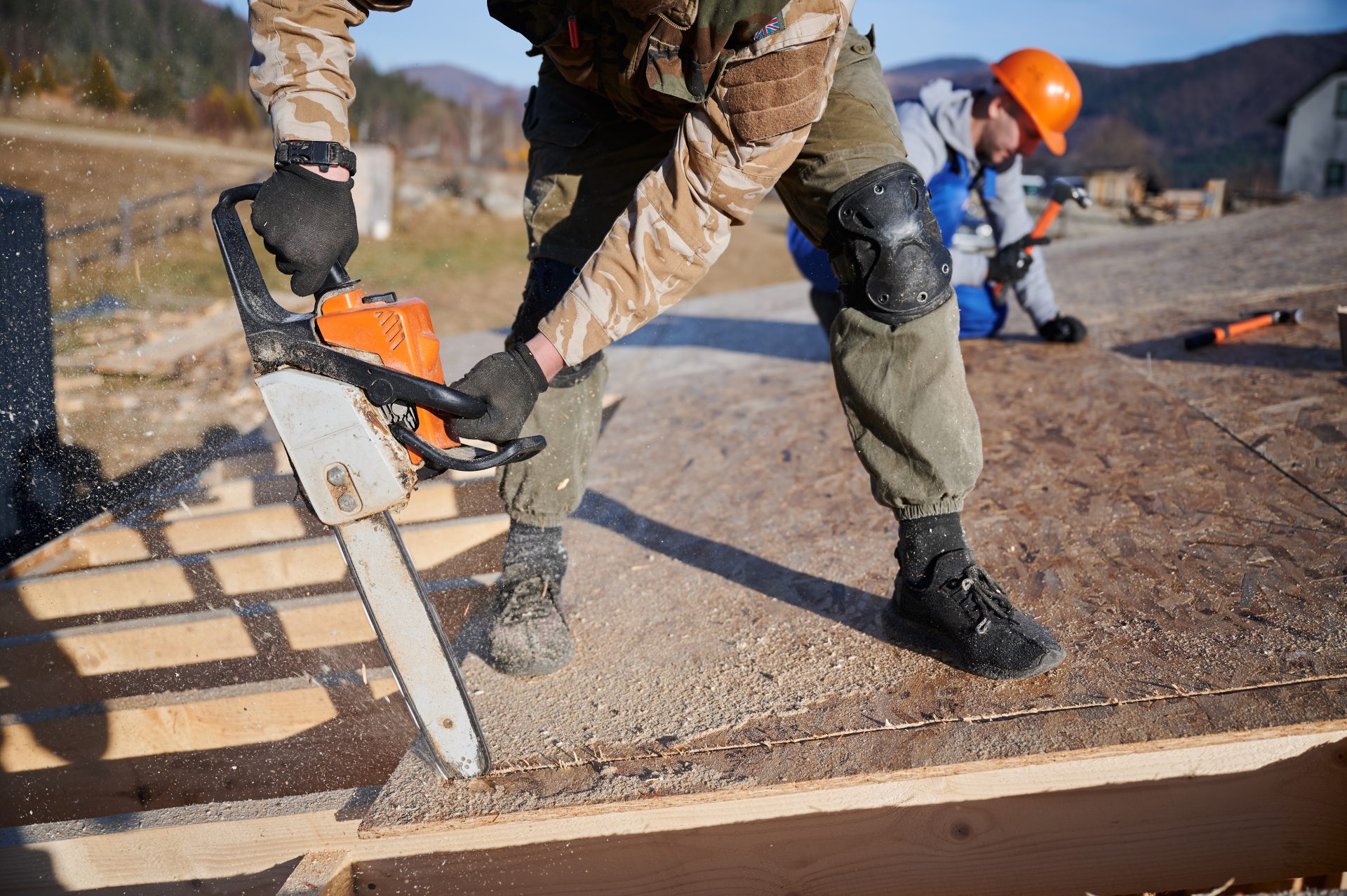
Os utilizadores de motosserras devem usar óculos de proteção, proteção auditiva, calças de proteção resistentes a cortes, botas com biqueira de aço e luvas de trabalho. A potência e a lâmina exposta podem causar ferimentos graves se não tiveres cuidado.
Mantenha um postura estável com os pés afastados na largura dos ombros. Mantenha sempre a serra abaixo da altura dos ombros. A zona de subornos Na ponta da barra está o ponto perigoso — evite que toque na madeira.
Verifique a tensão da corrente, o afiamento da lâmina e o travão antes de começar. Uma corrente sem corte é mais perigosa e mais difícil de utilizar. Segure sempre a serra com ambas as mãos, com os polegares à volta das pegas.
Não faça cortes sozinho nem em condições meteorológicas adversas. Mantenha as outras pessoas a uma distância mínima de 15 pés, por precaução.
Segurança na utilização de serras de vara
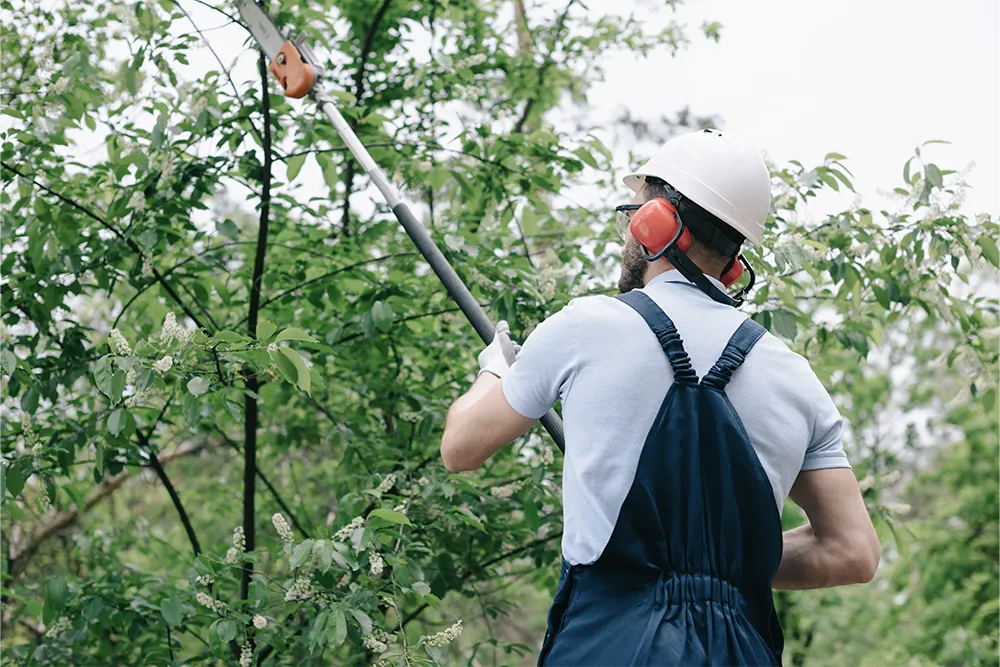
Antes de cortar, verifique sempre se existem cabos elétricos no ar. O contacto com cabos elétricos pode causar ferimentos graves ou mesmo a morte.
Mantenha-se a pelo menos 10 pés de distância de quaisquer linhas elétricas. Não vale a pena correr esse risco.
A fadiga é um grande problema com as serras de vara. Manter uma ferramenta comprida acima da cabeça durante algum tempo cansa imenso os braços e prejudica a coordenação.
Faça pausas frequentes e alterne os braços para evitar a fadiga muscular. Parece simples, mas faz uma enorme diferença.
Fique ao lado do local onde os ramos vão cair, nunca mesmo por baixo. As serras de vara mantêm-no afastado dos detritos que caem, mas mesmo assim tem de se posicionar de forma sensata.
Use óculos de proteção, luvas e um capacete sempre que utilizar uma serra de vara. É tentador não o fazer, mas não o faça.
Mantenha a lâmina afastada do corpo e fique com os dois pés em terreno firme. Nunca utilize uma serra de vara em cima de uma escada — é demasiado instável e arriscado.
Fatores de risco e práticas de trabalho seguras
Fatores de risco comuns a ambas as ferramentas:
- Fadiga do operador e perda de concentração
- Mau tempo, como vento ou chuva
- Piso escorregadio ou irregular
- Equipamento com manutenção deficiente
- Falta de formação ou experiência
Verifique as suas ferramentas antes de cada utilização. Siga as recomendações de manutenção do fabricante.
Lâminas afiadas e correntes com a tensão adequada cortam melhor e com mais segurança do que equipamento velho e gasto. Não ignore o básico.
Trabalhe durante o dia, quando conseguir ver bem. Planeie cada corte e pense onde se vai deslocar caso um ramo caia na direção errada.
Comece por fazer cortes mais pequenos para ver como o ramo reage. É melhor ir com calma do que ter de lidar com uma surpresa.
Melhores práticas de manutenção e cuidados
Ambos serras de haste e as motosserras precisam de manutenção regular se quiser que durem. Mantenha a corrente afiada, utilize o óleo adequado e guarde-as de forma adequada para evitar avarias e cortes malfeitos.
Afiação de correntes e óleo para guias
As correntes afiadas cortam com rapidez e segurança. Se a corrente estiver cega, terá de exercer mais pressão, o que aumenta o risco de recuo e desgasta a serra.
Afie a corrente a cada 3 a 5 horas de utilização, ou antes disso se esta expelir serradura em vez de lascas de madeira. A maioria das pessoas consegue afiar a corrente em casa com uma lima redonda adequada ao tamanho dos dentes da corrente.
Passe a lima por cada dente no mesmo ângulo — normalmente 30 graus. É um pouco tedioso, mas vale a pena.
O óleo de barra não é o mesmo que óleo para correntes. O óleo para correntes lubrifica a ranhura por onde a corrente passa.
Sem óleo para barras, o atrito gera calor e danifica tanto o guidão como a corrente. Verifique o reservatório de óleo antes de cada utilização e ateste-o, se necessário.
A maioria das serras consome um depósito de óleo para a lâmina por cada depósito de combustível ou carga da bateria. Fique atento a isso.
Óleo para correntes e lubrificação
O óleo para correntes mantém a corrente a deslizar suavemente ao longo do guia. A lubrificação reduz o atrito e evita o desgaste prematuro.
As serras a gasolina têm lubrificadores automáticos que pulverizam óleo sobre a corrente enquanto esta se move. Os modelos elétricos e a bateria fazem o mesmo, mas os seus reservatórios podem ser mais pequenos.
Verifique os orifícios de lubrificação da barra de vez em quando. A serradura e os detritos podem entupir esses orifícios.
A tensão da corrente também é importante para a lubrificação. Se a corrente estiver demasiado frouxa ou demasiado esticada, o óleo não chegará a todas as partes necessárias.
A corrente deve ficar bem ajustada ao guiador, mas ainda assim deve ser possível puxá-la ligeiramente com a mão.
Dicas sobre durabilidade e armazenamento
As ferramentas limpas duram mais tempo. Depois de utilizar a serra, limpe a serradura e a seiva da corrente, da barra e do corpo da serra.
Uma escova dura funciona bem para a limpeza. Não salte este passo — a acumulação de seiva dá muito trabalho mais tarde.
Para um armazenamento prolongado, retire a corrente da barra e mergulhe-a em óleo para barras, para evitar a formação de ferrugem. Guarde a barra na horizontal ou pendure-a, para que não se deforme.
Se utilizar um modelo a gás, adicione estabilizador de combustível para o tanque, se for ficar lá mais de 30 dias.
As serras de vara requerem cuidados especiais no que diz respeito às suas peças de extensão. Limpe os colares de bloqueio e verifique se apresentam sinais de desgaste.
Substitua quaisquer varas torcidas ou danificadas antes de voltar a utilizar a serra. Não vai querer que a cabeça da serra caia a meio do corte.
Escolher a ferramenta certa para as suas necessidades
A escolha entre uma serra de vara e uma motosserra depende do que vai cortar, do seu orçamento e da frequência com que vai realmente utilizar a ferramenta. Ter estes fatores em conta ajuda-o a determinar qual das ferramentas vale o seu dinheiro e esforço.
Serra de haste vs. motosserra: fatores-chave na tomada de decisão
A altura e a espessura dos ramos são os fatores mais importantes. As serras de vara alcançam até 15 pés, permitindo-lhe permanecer em segurança no chão.
Conseguem cortar ramos com cerca de 8 polegadas de espessura sem qualquer problema. Se o trabalho envolver madeira mais grossa, vai precisar de uma motosserra.
As motosserras são concebidas para galhos e troncos mais grossos ao nível do solo. Dão o seu melhor quando é necessária mais potência.
Se precisar de chegar a alturas elevadas, as serras de vara são a melhor opção — especialmente se não quiser ter de se preocupar com uma escada.
Pontos-chave para a tomada de decisão:
- Utilize uma serra de vara para ramos com mais de 8 pés
- Se a madeira tiver mais de 8 polegadas de espessura, use uma motosserra
- Corte ao nível do solo? A motosserra é a tua aliada
- Quer um corte preciso? As serras de vara fazem isso melhor
As serras de vara exigem força nos braços, uma vez que é necessário segurá-las acima da cabeça, mas não é preciso trepar. As motosserras requerem uma pegada firme e uma boa postura corporal para cortes seguros.
Orçamento, dimensão do imóvel e frequência de utilização
O teu orçamento é importante. As serras elétricas de vara básicas custam a partir de cerca de $80. As motosserras a gasolina custam cerca de $150 ou mais.
As versões alimentadas a bateria de qualquer uma das ferramentas variam entre $200 e $400. É uma variação bastante grande.
Qual é a dimensão da sua propriedade? Os jardins pequenos, com apenas algumas árvores, só precisam de uma serra de vara básica.
Se tiver muitas árvores grandes ou cortar lenha com frequência, talvez seja melhor ter ambas as ferramentas ou uma motosserra mais potente.
Se apenas podar ramos uma ou duas vezes por ano, as serras elétricas de vara são fáceis de manter. Quem poda com mais frequência tirará maior partido das ferramentas a gasolina.
Se faz trabalhos com árvores de vez em quando, vale a pena investir num equipamento de gama média e resistente.
O armazenamento também é importante. As serras de vara com extensões precisam de 8 a 12 pés de espaço. As motosserras cabem em espaços mais pequenos.
Resumo dos prós e contras
Vantagens da serra de vara:
- Não é preciso usar escadas, pelo que há menos risco de queda
- Atinge uma altura de 12 a 15 pés
- Mais leve, mais prático para trabalhos prolongados
- Ideal para agências de pequena e média dimensão
Limitações da serra de vara:
- Não consegue lidar com ramos com mais de 8 polegadas de espessura
- É preciso ter força nos braços para trabalhar com os braços levantados
- A queda de ramos continua a ser perigosa
Vantagens da motosserra:
- Atravessa rapidamente florestas densas
- É ideal para trabalhos de grande envergadura e para o abate de árvores
- Versátil para diversas necessidades de corte
- Funciona melhor ao nível do solo
Limitações da motosserra:
- É preciso uma escada para os ramos mais altos
- É mais pesado, por isso cansa-se mais depressa
- Maior risco de suborno
- Exige mais equipamento de segurança
Sinceramente, a serra de vara adequada para um jardim pode não servir para outro. Se precisares tanto de alcance como de potência, talvez acabes por ter de usar as duas ferramentas.
FAQs
Quais são as principais diferenças entre uma serra de vara e uma motosserra no que diz respeito ao corte e ao alcance?
Uma motosserra é uma ferramenta manual destinada ao corte de madeira grossa, troncos e árvores a curta distância. Possui uma grande potência e corta rapidamente, pelo que é ideal para trabalhos de grande envergadura, como o abate de árvores e a produção de lenha.
Controlas uma motosserra à distância de um braço. É uma experiência direta e um pouco intensa.
Uma serra de vara consiste numa pequena motosserra ou lâmina fixada na extremidade de uma vara comprida. Isso permite-lhe um alcance de 8 a 15 pés acima do solo.
As serras de vara destinam-se a aparar e podar ramos altos sem necessidade de utilizar uma escada. Não têm tanta potência como as motosserras, mas permitem-lhe permanecer em segurança no chão.
As motosserras têm normalmente barras mais compridas, pelo que cortam madeira mais grossa. As serras de vara sacrificam alguma potência em troca de maior alcance.
As motosserras são ideais para trabalhos ao nível do solo. As serras de vara são a melhor opção para ramos em altura.
Em que situações é que uma serra de vara é a melhor opção em vez de uma motosserra para trabalhos de poda de árvores?
As serras de vara são ideais quando é necessário podar ramos acima da cabeça. São perfeitas para aparar ramos perto de casas, vedações ou outros locais de difícil acesso.
Não é preciso usar uma escada, o que torna tudo muito mais seguro, especialmente se estiver a trabalhar sozinho. As serras de vara são ideais para trabalhos ligeiros de poda em jardins e pomares.
Se o seu objetivo principal for manter as árvores e os arbustos bem aparados, e não cortar troncos grandes, utilize uma serra de vara. Esse alcance extra é ideal para o corte de ramos em alturas elevadas.
A serra de vara é, em geral, mais segura do que a motosserra para os proprietários de casas, e que riscos continuam a existir?
As serras de vara são, em alguns aspetos, mais seguras para trabalhos em altura. Mantêm-no mais afastado da lâmina e permitem-lhe evitar o uso de uma motosserra enquanto está em cima de uma escada.
Mas não são isentos de riscos. Ainda é possível que caibam ramos em cima de si, e a vara comprida pode tornar-se difícil de manusear, especialmente quando está totalmente estendida.
Use sempre um capacete e proteção ocular ao utilizar uma serra de vara. É fundamental manter o equilíbrio.
Quando a haste está totalmente estendida, o controlo torna-se mais difícil. Não é tão preciso como se poderia esperar.
Que tipos de ramos ou materiais deve evitar cortar com uma serra de vara?
Não utilize uma serra de vara em troncos grossos ou ramos enormes. Estas serras não foram concebidas para abater árvores inteiras nem para cortar madeira com dimensões superiores ao limite indicado pelo fabricante.
As serras de vara têm dificuldade com madeiras duras e densas e com tudo o que exija muita força. Os ramos pesados ou imprevisíveis podem ser perigosos.
Limite-se a ramos mais pequenos, que possa cortar de forma rápida e segura. Se o ramo for mais grosso do que a barra ou a capacidade da serra de vara, opte por utilizar uma motosserra.
Tentar forçar uma serra de vara para além dos seus limites apenas acarreta o risco de danos e lesões.
Como se comparam as serras elétricas de poste com as motosserras a gasolina em termos de potência, autonomia e manutenção?
As motosserras a gasolina têm mais potência do que a maioria das serras elétricas de vara. São mais adequadas para trabalhos pesados e podem funcionar enquanto se continuar a reabastecer.
As serras elétricas de vara (com fio ou a bateria) são mais silenciosas e mais leves. Os modelos a bateria oferecem uma autonomia de 45 a 60 minutos, o que normalmente é suficiente para a maioria dos trabalhos de jardinagem.
A manutenção é mais fácil nos modelos elétricos — sem velas de ignição, filtros de ar nem mistura de combustível. Basta manter a corrente lubrificada e limpa.
As motosserras a gasolina requerem manutenção regular: afiar a corrente, limpar os filtros de ar e verificar as velas de ignição. As serras de vara a bateria não precisam de cabos, mas os modelos a gasolina continuam a ser superiores em termos de potência bruta e de utilização durante todo o dia.
Que características deve ter em conta ao escolher uma serra de vara (comprimento da barra, extensão, peso e ângulo da cabeça)?
O comprimento da lâmina determina a espessura máxima dos ramos que pode cortar. A maioria dos modelos destinados a particulares tem lâminas com 8 a 12 polegadas, que funcionam bem com ramos com uma espessura de até cerca de 6 ou 8 polegadas.
Se optar por uma barra mais comprida, terá maior capacidade de corte, mas a ferramenta fica mais pesada. É algo a ter em conta se não quiser andar a carregar peso extra.
O alcance da extensão também é importante. Para a maioria das pessoas que podam árvores em casa, um alcance de 10 a 15 pés é suficiente.
As varas telescópicas ajudam-no a ajustar a altura consoante as necessidades. Certifique-se apenas de que a vara não fique tão comprida que se torne difícil de controlar ou de manter o equilíbrio.
O peso pode realmente influenciar o nível de cansaço que se sente. As serras mais leves são menos cansativas para os braços, embora, por vezes, não sejam tão resistentes ou potentes como as mais pesadas.
Uma serra de vara bem equilibrada distribui o peso, para que este não recaia inteiramente sobre os ombros.
Os ângulos de inclinação ajustáveis são úteis para ramos difíceis de alcançar. Pode posicionar a barra na posição ideal sem se esforçar.
Procura um ajuste da corrente sem ferramentas, se quiseres manter as coisas simples quando estiveres a trabalhar no jardim. E não te esqueças: é imprescindível que as hastes telescópicas tenham mecanismos de bloqueio sólidos. Certamente não vais querer que a haste se dobre em cima de ti a meio do corte.
Quer saber mais sobre os nossos produtos?
Ver todos os produtos agora