Push Mower vs. Self-Propelled Mower: Which One is Better?
Jump to section
A push mower vs. self-propelled mower decision depends on the lawn and the operator’s effort: a push mower is ideal for small, flat yards and lower cost, while a self-propelled mower is better for hills, thick grass, or larger lawns where reduced effort matters.
This guide draws on hands-on mower testing and widely reported performance data from trusted lawn equipment reviews. It explains how core differences affect cost, control, and comfort, how features like wheel drive and variable speed matter, and when each mower fits a particular yard and mowing routine.
What Is a Push Mower?
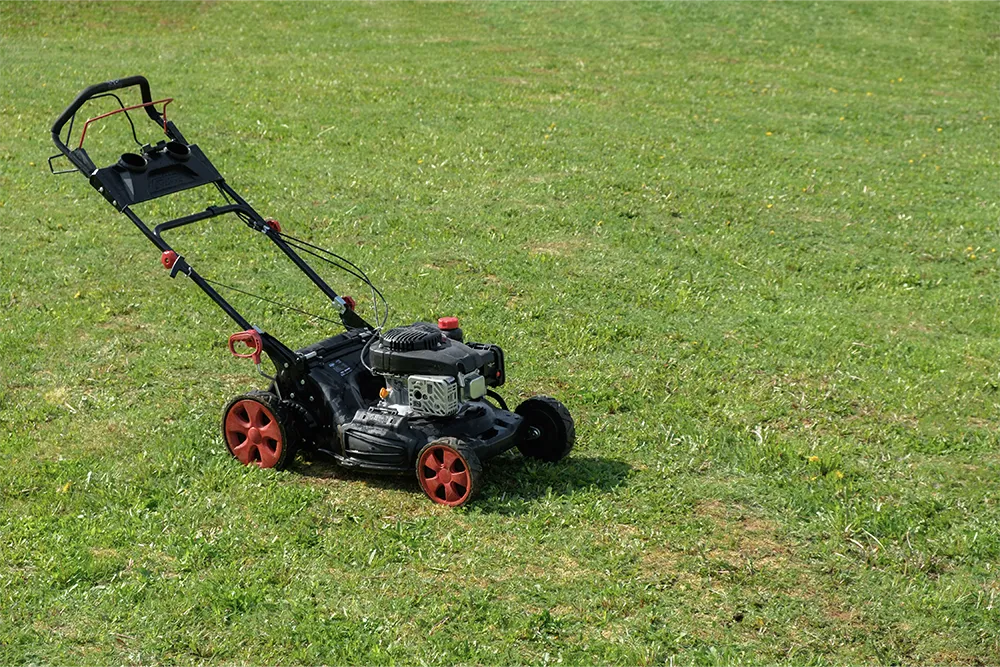
A push mower is a walk-behind lawn mower that moves only when the operator pushes it forward. It has no drive system, so the operator controls the speed and direction. Push mowers fit small to medium lawns where control and simplicity matter more than speed.
Common types of push mowers:
Manual reel mower / reel push mower
This type uses a cylinder of blades that turns when the wheels roll. Because it has no motor, it makes no noise and uses no fuel. In practice, this works best on short, flat grass and small yards.
Electric push mower
This mower runs on a corded or battery motor that spins the blade, but the operator still pushes it. Because the motor powers the cut but not the wheels, the blade maintains steady speed with less weight than a self-propelled model.
Gas push mower
A gas push mower uses a small engine to spin the blade. The engine delivers higher blade speed, allowing it to cut thicker grass. This provides more power, but also requires fuel and regular maintenance.
Pros of push mowers:
- Lower purchase cost
- Lighter weight
- Simple design
Cons of push mowers:
- Requires physical effort
- Slower on large lawns
- Less help on hills
What Is a Self-Propelled Mower?
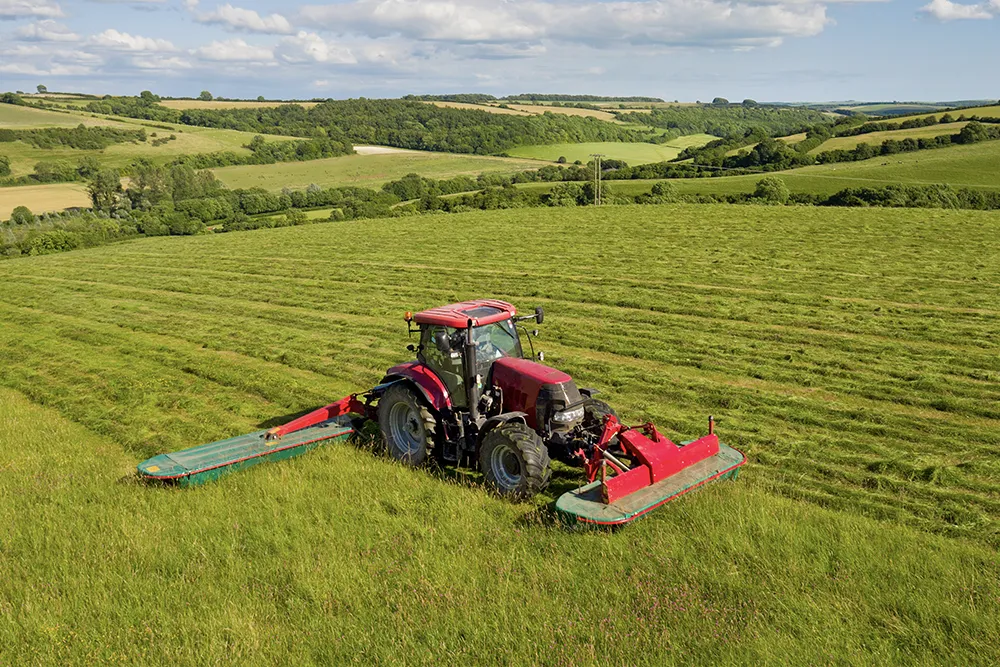
A self-propelled mower moves forward using a built-in drive system, so the operator guides it instead of pushing it. The engine or electric motor powers the wheels, not just the blade. This reduces physical effort during mowing, especially on slopes.
Common types of self-propelled mowers:
| Drive type | How it works | Best use |
| Front-wheel drive | Front wheels pull the mower | Flat yards with tight turns |
| Rear-wheel drive | Rear wheels push the mower | Hills and uneven ground |
| All-wheel drive | All wheels provide traction | Steep or rough terrain |
Pros of Self-Propelled Mower:
- Reduced pushing force because the wheels move on their own
- Better control on hills due to powered traction
Cons of Self-Propelled Mower:
- Higher cost due to added drive parts
- More components that may need maintenance over time
Push Mower vs. Self-Propelled Mower: What are the Core Differences?
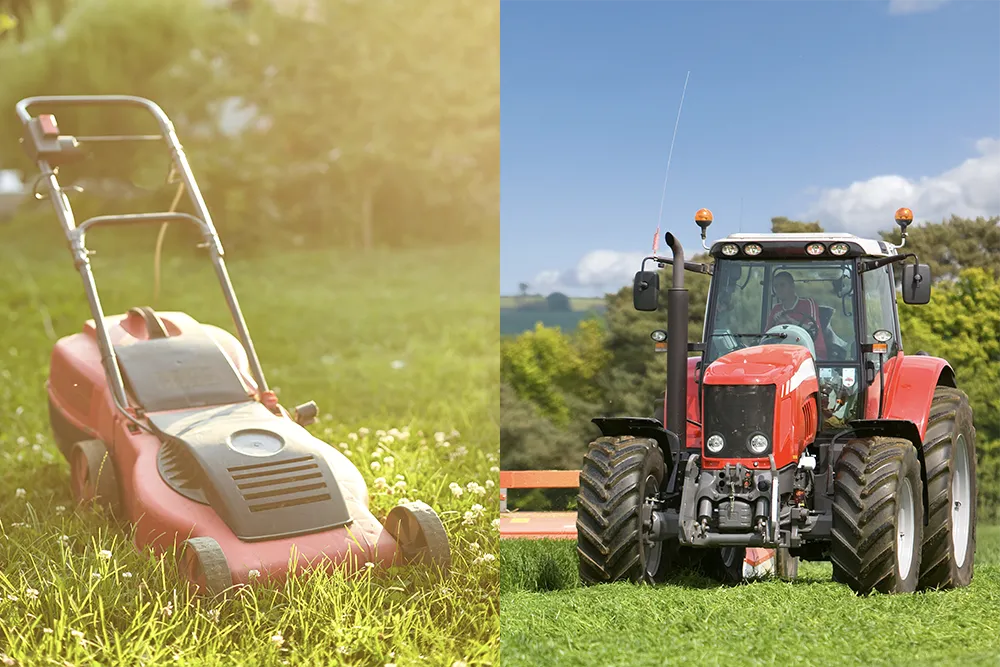
Push mowers and self-propelled mowers are both walk-behind types, but they differ in movement, cutting speed, and operator effort. These differences affect mowing speed, cost, fuel efficiency, and long-term upkeep.
A quick glance at the core differences:
- Effort and User Experience: Push mowers move only when the operator pushes, while self-propelled mowers use a drive system.
- Cutting Performance and Speed: Push mowers depend on walking pace; self-propelled mowers have a drive system.
- Weight and Maneuverability: Push mowers weigh less; self-propelled mowers feel heavier.
- Smart Features: Push mowers usually focus on basic controls; self-propelled mowers often include variable control.
- Cost and Maintenance: Push mowers cost less; self-propelled mowers cost more.
- Maintenance and Longevity: Both types require regular maintenance.
- Environmental Impact: Electric push and self-propelled mowers produce no direct emissions.
Effort and User Experience
A push mower moves only when the operator pushes it forward. Because the wheels are not powered, the arms and legs control both speed and direction. In practice, this requires more work, especially in thick grass or on long passes.
A self-propelled mower uses a drive system connected to the wheels. Once a lever is engaged, the engine or motor moves the mower forward. This reduces physical strain because the operator guides the mower instead of pushing its full weight. This is most helpful on slopes, uneven ground, or larger lawns where effort accumulates over time.
Cutting Performance and Speed
Cutting performance depends on engine power, blade design, and the cutting deck, not just the drive system. Both mower types often use similar engines or electric motors and blade shapes. The difference is evident in mowing speed and consistency.
With a push mower, walking pace controls cutting speed. Slowing down in thick grass gives the blade more time to cut cleanly. A self-propelled mower maintains a steady forward pace because the drive system pulls it along. In practice, this leads to faster mowing speed on large areas but can reduce cut quality if the operator moves too fast for the grass height.
Weight and Maneuverability
Push mowers weigh less because they lack a transmission, belts, or drive gears. Many gas push mowers weigh 50–70 pounds, while self-propelled models often exceed 80 pounds. This lower weight makes lifting, turning, and storage easier.
Self-propelled mowers feel heavier when the drive is off, such as when pulled backward. The added weight comes from the drive system, which improves traction but reduces agility. In tight spaces like narrow paths or around trees, push mowers change direction faster with less effort.
Smart Features
Push mowers usually focus on basic controls: manual height adjustment, pull-start engine, and fixed cutting width around 20–21 inches. This simple design reduces parts that can fail.
Self-propelled mowers often include variable speed control, push-button start, and drive options like front-wheel or rear-wheel drive. Rear-wheel drive improves grip because engine weight sits over the wheels. This allows better control on hills and wet grass. Battery-powered models may adjust speed based on resistance, which helps manage power use.
Cost and Value
Cost differs mainly due to the drive system. Push mowers cost less because they lack transmissions and drive components. Entry-level gas push mowers often cost hundreds less than similar self-propelled models.
Self-propelled mowers cost more upfront and may cost more to repair. Drive belts, gears, or motors can wear out over time. Operators pay more for reduced effort and faster coverage. Fuel efficiency remains similar when engines match, but repairs increase long-term ownership costs for self-propelled units.
Maintenance and Longevity
Both mower types require regular maintenance: oil changes, blade sharpening, and air filter replacement for gas models. Battery models require charging and eventual battery replacement.
Self-propelled mowers add maintenance for the drive system. Belts stretch, gears wear, and cables need adjustment. Long-term reliability depends on upkeep. Push mowers often last just as long or longer because fewer moving parts reduce failure points.
Environmental Impact
Environmental impact depends on the power source more than the drive type. Gas push and gas self-propelled mowers produce similar emissions when engines match. Fuel efficiency stays close because blade load remains the same.
Electric push and self-propelled mowers produce no direct emissions during use. Battery-powered self-propelled models draw more power because the drive motor is active, slightly reducing runtime per charge. Push electric mowers often run longer on the same battery because all energy goes to the blade.
How to Choose Between Push and Self-Propelled Mower for a Lawn?
The mower should match the lawn size, terrain, and the operator’s plan for movement and storage. Yard layout and available space matter as much as engine power.
- Match Mower to Lawn Size and Terrain: Push mowers suit lawns under ¼ acre on flat ground. Self-propelled mowers assist on slopes or thick grass by moving the wheels. For lawns over ½ acre, riding or zero-turn mowers may provide faster coverage.
- Consider Maneuverability: Push mowers are lighter and pivot easily around obstacles, ideal for small yards. Self-propelled mowers are heavier but often include variable-speed controls for uneven ground.
- Factor in Storage: Walk-behind mowers can store upright in small garages or sheds. Riding and zero-turn mowers need more floor space.
When to Choose a Push Mower?
A push mower is ideal for small, mostly flat yards. Its lack of a drive system reduces weight, making it easier to turn, stop, and back up in tight areas.
Push mowers are suitable for operators who prefer simple operation and fewer parts. They lack belts, gears, or drive motors, reducing repair needs over time.
Cost is another factor. Push mowers usually cost less because they do not include a propulsion system. This allows investment in features like mulching blades or adjustable cutting height without raising the total price.
Physical ability matters. Operators capable of walking steadily and pushing moderate weight can use push mowers effectively on even ground.
Push mowers are appropriate when:
- Lawn is under ¼ acre
- Ground is level or gently sloped
- Easy storage is needed due to lighter frame
- Lower fuel or battery use is preferred
When to Choose a Self-Propelled Mower?
A self-propelled mower is suitable for medium to large yards, usually over ¼ acre. Its drive system reduces the force needed to push the mower, lessening arm and leg strain.
Sloped or uneven lawns favor self-propelled models. Powered wheels maintain steady movement on hills, keeping control and avoiding frequent stops.
Frequent mowing or a need to finish quickly also favors self-propelled mowers. They allow walking at a steady pace instead of stopping and restarting, which is helpful when time or energy is limited.
Self-propelled mowers are recommended when:
- Mowing a medium to large yard over ¼ acre
- Sloped or uneven lawns
- Faster completion is desired
FAQs
How long do self-propelled and push mowers last?
With fewer moving parts, many push mowers last 8 to 12 years with regular maintenance like blade sharpening and oil changes. This reduces repairs and lowers long-term costs.
A self-propelled mower uses a drive system. Added belts, gears, or motors often limit lifespan to 7 to 10 years depending on use and upkeep. More parts can wear out and need service over time.
Can self-propelled lawn mowers be used manually like push mowers?
Yes. Releasing the drive control lets the wheels roll freely, allowing manual pushing in tight areas or for short passes. However, self-propelled mowers are heavier than true push mowers, so manual pushing requires more effort, even on flat ground.
Why might someone choose a push mower over a self-propelled model?
Push mowers cost less because they lack a drive motor or transmission, often selling for at least $100 less than comparable self-propelled versions. This lowers the upfront cost and simplifies ownership.
Push mowers also use less fuel or battery power because all energy goes to the blade. In practice, this provides longer run time per tank or charge and fewer mechanical parts to maintain.
Want to Know More About Our Products?
View All Products Now