
Chainsaw Maintenance and Safety: Essential Guide for Proper Use
Jump to section
A well-maintained chainsaw runs smoother, lasts longer, and keeps the operator safer. Proper chainsaw maintenance and safe operation prevent costly repairs and reduce the risk of injuries. By understanding how to care for and control this powerful tool, anyone—from a seasoned operator to a homeowner cutting firewood—can work more effectively.
This guide outlines how to pick the right chainsaw, recognize important safety features, use the saw correctly, and perform essential maintenance. It draws on best practices shared by safety experts, manufacturers, and industry trainers to help operators work with confidence and control every time the saw is started.
How to Choose the Right Chainsaw for an Operator
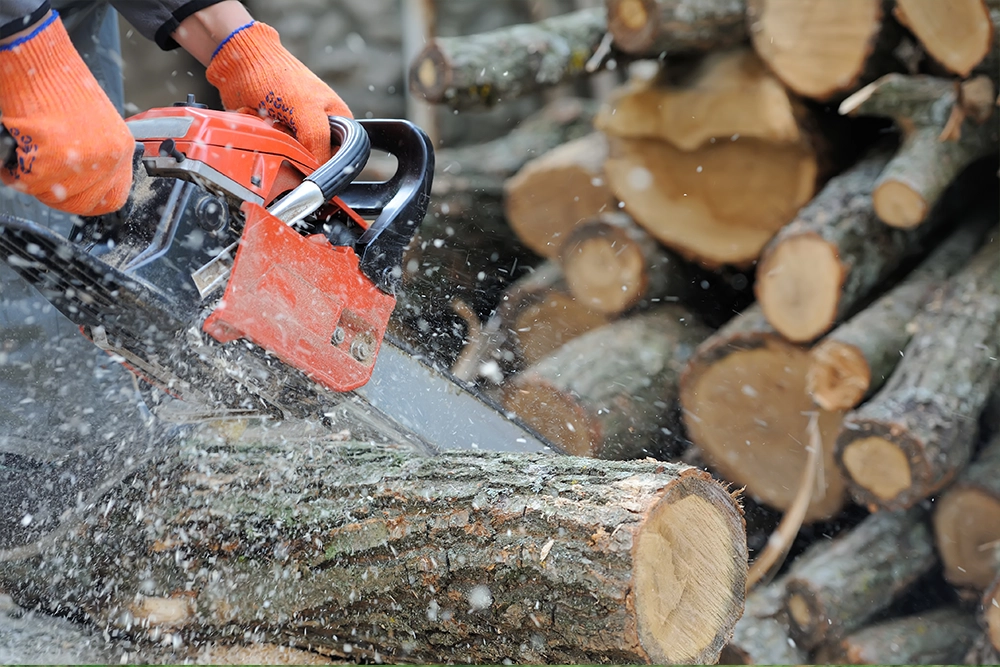
Choosing the right chainsaw starts with matching the tool to the operator’s typical cutting tasks—12–14″ for small logs and branches, 20″+ for large trees. Shorter bars offer better control and lower kickback risk, making them safer for beginners.
Safety features like chain brakes and anti‑vibration mounts, along with proper weight and ergonomics (10–15 lb), reduce fatigue and improve cutting accuracy for longer, more comfortable use.
What are Chainsaw Safety Features and Their Functions?
Chainsaws include engineered components that protect operators from kickback, vibration, and mechanical failure. Each safety system serves a distinct role that prevents accidents, improves control, and reduces fatigue during extended use.
Below are chainsaw safety features:
- Chain Brake: Stops the chain instantly during kickback, preventing injury and adding control when starting or repositioning the saw.
- Chain Catcher: Prevents a broken or derailed chain from hitting the operator, reducing injury risk.
- Spark Arrestor: Traps sparks from the exhaust to prevent fires, especially near dry vegetation.
- Vibration Reduction System: Isolates handles from engine vibration, reducing fatigue and improving control.
- Trigger and Throttle Interlock: Requires deliberate action to engage the chain, preventing accidental starts.
- Right-Hand Guard: Protects the operator’s hand if the chain breaks or is thrown backward.
- Muffler: Reduces noise and directs exhaust away from the operator while maintaining engine efficiency.
- Centrifugal Clutch: Engages the chain only at higher engine speeds, allowing safe idling and smoother cutting.
- Bumper Spikes: Metal teeth on the saw that anchor it to the wood, improving stability, reducing fatigue, and providing better control during cuts.
How to Use a Chainsaw Safely
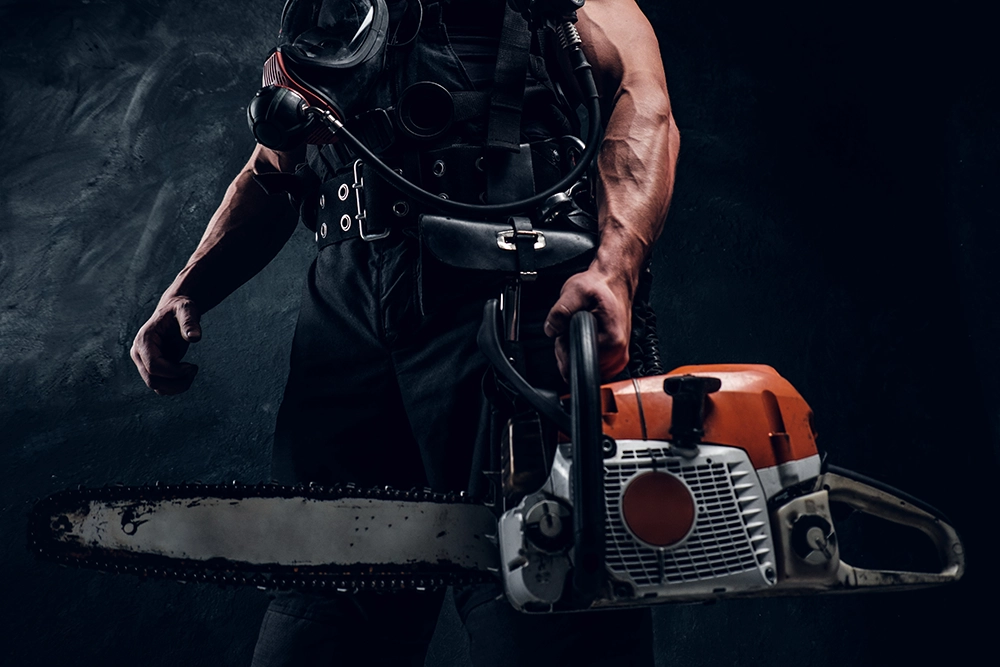
Using a chainsaw requires awareness, preparation, and careful handling. Operators must wear protective gear, understand how to control the saw’s safety devices, and apply correct cutting techniques to prevent injuries such as kickback or chain contact.
Personal Protective Equipment
Personal protective equipment (PPE) creates a barrier between the operator and hazards. The most important items include a helmet with a face shield, hearing protection, cut-resistant gloves, chainsaw chaps or pants, and steel-toe boots with nonslip soles. Combined, these PPE items reduce the most common causes of chainsaw injuries—flying debris and accidental chain contact.
Use Safety Gear with the Chainsaw
Each chainsaw includes built-in safety gear that supports control during operation. A chain brake stops the chain rapidly if kickback occurs. Kickback happens when the upper part of the guide bar nose contacts wood or another object, forcing the saw toward the operator.
Operators should confirm that all safety parts move freely before starting the engine. If the chain brake lever feels stiff or the catcher is bent, it reduces protection. In practice, a few seconds of inspection can prevent serious injuries later.
Use Safety Devices on the Chainsaw
Modern chainsaws feature mechanical systems that improve safety beyond personal gear. The throttle lock prevents the trigger from engaging unless pressed intentionally. Because of this interlock, the chain will not spin unexpectedly when handling the saw or starting it.
Another device, the low-kickback chain, includes guard links and small-radius cutters that lower the tendency for sudden upward motion. In other words, it helps maintain stability when cutting through knots or uneven grain. For the operator, this translates to smoother operation with fewer reactive forces.
Cut Correctly with the Chainsaw
Proper cutting methods prevent hazards that safety devices alone cannot stop. The saw should always be held with two hands, keeping the thumbs wrapped around the handles. The operator should stand with feet shoulder-width apart and slightly to the left of the cutting line, never directly behind the bar.
Cuts should be started at full throttle, using the lower portion of the guide bar rather than the tip. This position reduces the risk of kickback. Cutting above shoulder height or using the nose of the bar should be avoided unless performing a plunge cut with experience and control.
Before felling a tree, an escape route should be planned at a 45-degree angle from the expected fall direction. Debris should be cleared from the area to prevent tripping if a quick retreat is needed. Simple preparation steps like these make chainsaw operation safer, steadier, and more predictable.
How to Maintain a Chainsaw
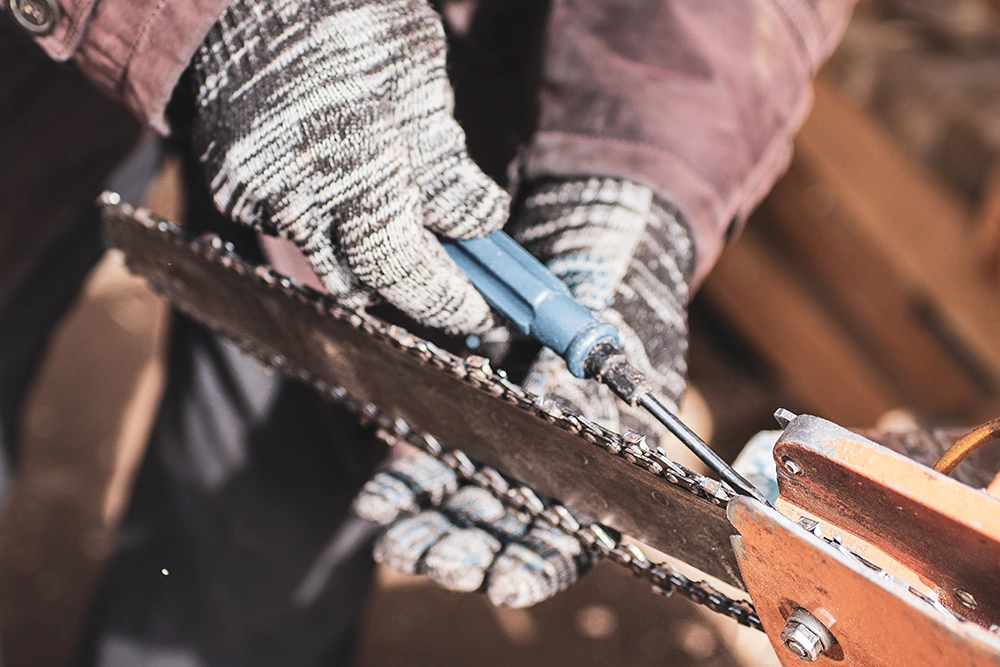
Regular chainsaw maintenance protects moving parts, keeps cutting speed consistent, and prevents safety risks during operation. It involves basic tools, cleaning, inspection, sharpening, lubrication, and correct storage to keep the machine reliable when needed most.
What Basic Tools Do Operators Need?
Maintaining a chainsaw requires simple but specific tools. A scrench (a combination screwdriver and wrench) fits common maintenance tasks like checking the chain tension or removing the spark plug. A round file and file guide help sharpen the chain evenly. A soft brush, compressed air, or lint-free cloth removes sawdust and oil buildup from crevices.
When cleaning or adjusting, wearing gloves and securing the chainsaw on a stable surface reduces the chance of injury and slipping tools.
Clean the Chainsaw
Cleaning a chainsaw prevents clogged filters, overheating, and corrosion. Sawdust, resin, and chain oil residue build up inside the sprocket cover, along the bar groove, and in the air filter housing. Removing this debris maintains unrestricted airflow and consistent cooling.
A soft brush or compressed air should be used to clean vents, cooling fins, and the air filter. For stubborn grime, a small amount of mild detergent and warm water is safe for plastic and metal housing. Parts should be wiped dry completely before reassembly to prevent moisture-related corrosion.
The air filter should be cleaned or replaced depending on its condition. A clogged filter limits oxygen to the combustion chamber, reducing power and causing excessive fuel use. Keeping it clean ensures easier starts and longer engine life.
Inspect the Chainsaw
Inspection helps catch early signs of damage before they become failures. Start with the chain, bar, and sprocket—look for excessive wear, broken teeth, or cracks. A worn guide bar with uneven rails can cause the chain to cut crookedly, creating kickback risk.
The chain tension should be checked before each use. It should be snug on the guide bar but move freely by hand. Loose chains can derail; overtightened ones wear out the sprocket and bar faster. The spark plug should be examined for carbon buildup or cracked insulation as it affects ignition consistency.
Control surfaces like the throttle trigger, chain brake, and safety catches must function smoothly. If any feel stiff or loose, they should be serviced before running the machine. Regular checks ensure the chainsaw remains predictable in varied conditions.
Sharpen the Chainsaw
A sharp chain increases cutting precision and reduces the effort required. The cutting teeth should have identical angles and lengths to maintain balance across the chain. Each tooth includes a cutter edge and depth gauge, and both must be maintained together to prevent uneven cutting.
The correct diameter round file should be used based on the chain size, typically between 4.0 mm and 5.5 mm. Filing at the correct angle—usually 30 degrees—keeps teeth uniform. After several sharpenings, the height of the depth gauges should be reduced using a flat file and guide.
A dull chain creates fine sawdust and forces the engine to work harder, raising temperature and fuel use. Sharp teeth cut faster and safer, extending both engine and bar life while reducing strain on the operator.
Oil the Chainsaw
Proper lubrication reduces heat and friction between the chain and bar. The oil reservoir automatically feeds oil through a small hole near the bar’s groove during operation. This system should be checked often, as a clogged oil port or low level can cause the chain to overheat and stretch.
Bar and chain oil, not motor oil, should be used. It has tackifiers that help it cling to the moving chain. Flow should be tested by running the saw against light-colored wood; a faint oil line should appear. If not, the oil inlet and filter screen should be cleaned.
Adequate lubrication minimizes wear on the bar rails and sprocket nose. For operators, this means smoother cuts and fewer mechanical failures, especially during long sessions or when cutting hardwood.
Store the Chainsaw Properly
Correct storage protects the chainsaw from moisture, dust, and fuel degradation. After each use, the fuel tank should be drained or a fuel stabilizer added for gas models. This prevents carburetor blockage from evaporated fuel residues. The spark plug wire should be disconnected when storing for long periods.
The exterior should be cleaned to remove oil and dirt, and the chain slightly loosened so it doesn’t contract and stress the bar during temperature changes. The saw should be kept in a dry, cool space, preferably with a cover that allows ventilation.
Storing it flat prevents leaks and keeps seals from drying out. This approach avoids startup problems, rust, and premature wear, leaving the chainsaw ready for work at any time.
FAQs
How often should regular maintenance be performed on a chainsaw?
A chainsaw should receive basic inspection and cleaning after every use, including checking the chain tension, air filter, and oil levels.
More detailed maintenance—such as cleaning the cooling fins, inspecting the spark plug, and servicing the bar groove—should occur weekly or after every 10 hours of operation, whichever comes first.
Deep maintenance involving fuel system cleaning and part replacement typically happens monthly or every 25 hours of use. These intervals help reduce wear on moving parts and prevent unexpected engine failure.
How can one acquire certification in chainsaw maintenance and safety?
Certification usually comes from recognized forestry, trade, or equipment safety organizations, such as those that offer OSHA-approved or industry-accredited courses. These programs teach correct cutting methods, maintenance standards, and emergency response procedures.
Training often includes both classroom instruction and hands-on practice, such as sharpening chains, checking safety features, and managing kickback zones. Completing and passing both written and practical exams confirms that the trainee can safely maintain and operate a chainsaw under field conditions. For the operator, this means verified competence that many employers and insurers require before on-site work.
What should be included on a chainsaw safety checklist?
A standard chainsaw safety checklist covers pre-use inspection, operation, and post-use care.
Key items include verifying chain tension, checking that the chain brake and throttle lock operate correctly, ensuring bar oil flow, and confirming that all nuts and bolts are tight.
It must also include personal protective equipment (PPE) checks—helmet with face shield, cut-resistant gloves, chaps, hearing protection, and steel-toed boots. These items protect from flying debris and kickback injuries. For the operator, using this checklist before each session reduces accident risk and maintains the tool in ready condition.
Want to Know More About Our Products?
View All Products Now