
CFM vs. MPH for Leaf Blowers: What’s the Difference?

Understanding airflow performance is the foundation of true engineering precision. When evaluating a leaf blower’s efficiency, two numbers stand out — CFM (Cubic Feet per Minute) and MPH (Miles per Hour).
In this guide, we’ll break down the relationship between air volume (CFM) and air velocity (MPH), how they interact.
What Are CFM and MPH in Leaf Blowers?

Both CFM and MPH describe airflow — but from different perspectives.
CFM (Cubic Feet per Minute) represents volume: how much air the system moves per minute.
It determines the coverage capacity of the blower — how large an area can be cleared efficiently.
MPH (Miles per Hour) represents velocity: the speed at which that air exits the nozzle.
It determines force concentration — the ability to dislodge dense or wet debris.
In essence:
- CFM measures efficiency of displacement.
- MPH measures intensity of impact.
From a design standpoint, the ideal system ensures that air velocity and air volume remain in aerodynamic harmony — meaning minimal turbulence, stable pressure zones, and controlled energy transfer.
CFM vs. MPH — Which Matters More?
This is one of the most misunderstood comparisons.
Consumers often ask, “Which is better?”, but engineers ask, “For which context?”
| Attribute | CFM (Air Volume) | MPH (Air Speed) |
| Function | Moves more air across wide areas | Delivers higher kinetic energy per particle |
| Ideal For | Clearing large, dry leaves | Blowing heavy, wet, or compacted debris |
| Strength | Coverage efficiency | Focused power and penetration |
In practice, the right performance balance depends on the intended environment.
For instance, in open lawns, higher CFM ensures faster surface clearing.
In dense, wet conditions, higher MPH helps break surface resistance.
However, advanced engineering aims not for extremes — but for optimal synergy, where both metrics interact efficiently without one compromising the other.
That’s the point where air volume meets air velocity in perfect equilibrium.
How CFM and MPH Work Together
Inside every high-performance blower, the motor, fan, housing, and nozzle act as an integrated airflow system. When air moves through the impeller, its pressure differential converts electrical or fuel energy into kinetic motion.
A wide impeller increases the CFM, capturing more air mass per rotation. A tapered nozzle increases the MPH, focusing that air into a faster stream. Balancing these two is where engineering craftsmanship becomes visible.
A poorly balanced design might boast high CFM but lose power due to turbulence or pressure leaks. Over-compressing airflow for high MPH can cause back pressure, noise, and energy waste.
The true mark of innovation is maintaining pressure efficiency while minimizing turbulence — that’s what separates engineered performance from inflated specifications.
Real-World Application Scenarios
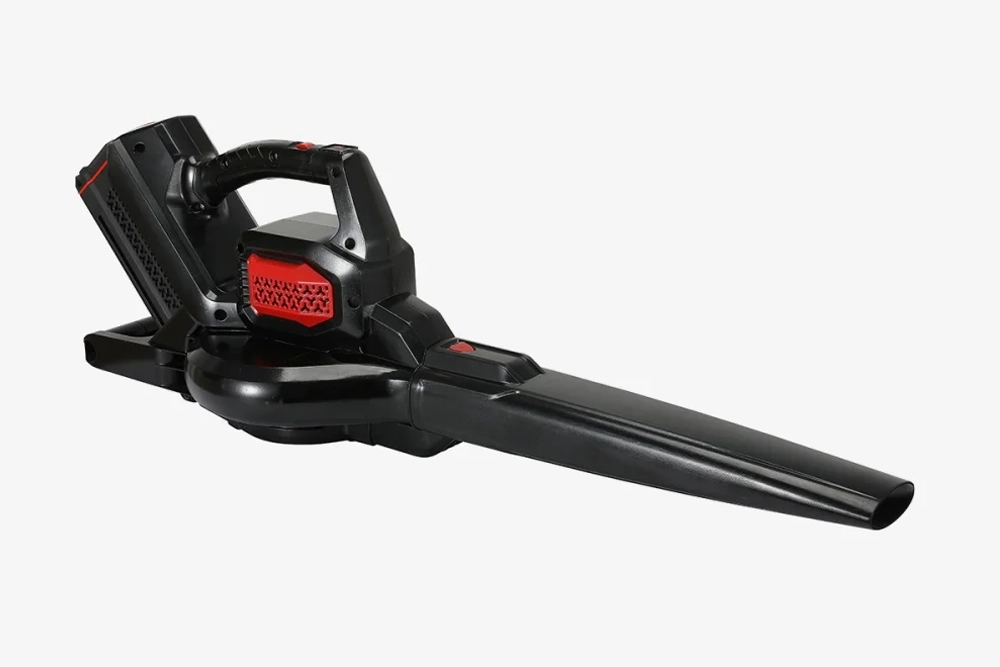
Consider how different users experience airflow:
A homeowner clearing light leaves benefits from wide coverage — thus, higher CFM ensures time efficiency.
A landscaper working with wet debris requires targeted thrust, where MPH dominates.
And in commercial maintenance, hybrid CFM–MPH designs provide consistency across diverse terrains.
From a manufacturing standpoint, designing multiple airflow profiles across product lines (e.g., wide-flow, high-velocity, balanced) ensures adaptability — a direct reflection of engineering intelligence in product differentiation.
Engineering Factors That Shape Performance
Behind every airflow number lies mechanical precision.
Each design component interacts with fluid dynamics in measurable ways:
- Impeller Design determines how much air mass is captured per rotation. Larger diameters increase CFM; curved blades balance pressure distribution for efficiency.
- Nozzle Geometry defines air acceleration. Tapered outlets increase velocity; wide-mouthed ones maintain volume.
- Motor Efficiency influences kinetic transfer. High-RPM brushless systems ensure stable airflow under varying loads.
- Housing Aerodynamics reduce drag and turbulence, improving both CFM and MPH simultaneously.
- Energy Source Optimization (battery/fuel/electric) stabilizes pressure output and maintains consistent torque curves.
These are the micro-semantics of engineering — small, deliberate adjustments that shape the macro-context of product performance.
Engineering Maintenance for Optimal Output
Even the most refined airflow systems require care to sustain design performance:
- Keep air inlets clear – Blocked vents cause pressure imbalance and CFM loss.
- Replace worn nozzles – Erosion alters the venturi effect, disrupting MPH flow.
- Use fully charged batteries – Voltage sag reduces motor torque and air velocity.
- Operate at optimal angles (30–45°) – Ensures debris lift without energy waste.
- Store dry – Moisture can unbalance the fan and reduce rotational efficiency.
Routine maintenance preserves aerodynamic integrity — the invisible structure of performance that keeps CFM and MPH aligned.
Summary: Balancing the Two for True Performance

| Metric | Meaning | Real-World Role | Ideal Engineering Focus |
| CFM | Air Volume | Broad coverage | Impeller geometry, housing design |
| MPH | Air Speed | Penetration power | Nozzle shape, RPM optimization |
| Balanced Ratio | Combined efficiency | Real-world performance stability | Aerodynamic harmony |
A well-engineered leaf blower doesn’t simply chase high numbers — it refines the relationship between them.
When airflow remains smooth, pressure is consistent, and noise is controlled, you achieve the perfect synergy between energy input and work output.
That balance — between CFM and MPH — defines not just performance, but engineering integrity.
For manufacturers, CFM and MPH are not marketing metrics — they are engineering expressions.
They represent how effectively your design converts potential energy into usable air movement.
By mastering the dynamic between air volume and air velocity, you’re not just improving leaf blower performance — you’re shaping your brand’s engineering signature.
Want to Know More About Our Products?
View All Products Now