Quando cortar a relva recém-plantada: quanto tempo esperar antes do primeiro corte
Saltar para a secção
Quando cortar a relva recém-plantada: quanto tempo esperar antes do primeiro corte
O relvado novo deve ser cortado pela primeira vez cerca de 14 a 21 dias após a instalação — assim que os fios de relva atingirem cerca de um terço a mais do que a altura de corte pretendida e as raízes se tiverem fixado no solo. O momento exato depende do tipo de relva, da estação do ano, do seu horário de rega e das condições meteorológicas. Se cortar a relva demasiado cedo, o relvado solta-se sob as rodas. Se esperar demasiado tempo, o primeiro corte provoca um choque no relvado, fazendo-o amarelar.
Este guia explica como saber quando o relvado está pronto, como fazer o primeiro corte sem causar danos e o que fazer nas semanas seguintes.
Por que é que o momento em que faz o primeiro corte da relva é importante
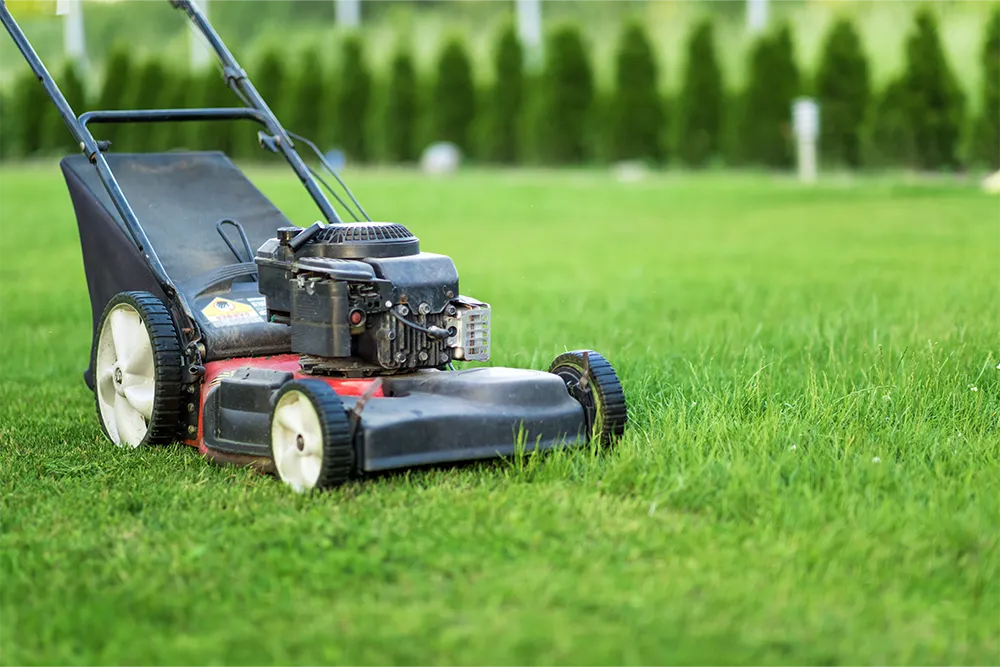
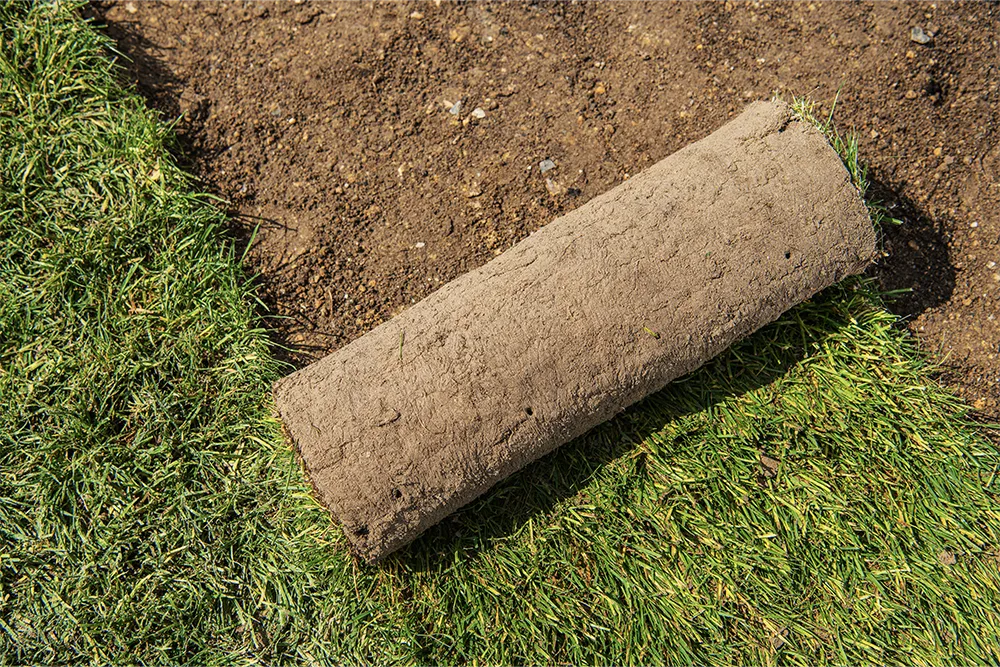
Quando o relvado é entregue, vem em rolos ou quadrados de relva madura já fixada a uma fina camada de solo. As folhas parecem estar prontas a ser cortadas de imediato. Mas o raízes não são.
Durante as duas primeiras semanas após a instalação, as raízes do relvado novo são superficiais. Estendem-se apenas até à camada de solo original que acompanhava o relvado — normalmente com menos de meia polegada de profundidade. Se cortar a relva durante este período, a lâmina giratória e o peso do cortador de relva puxam o relvado solto. Alguns pedaços levantam-se. As bordas descascam. Por vezes, secções inteiras deslizam para fora por baixo das rodas.
O primeiro corte também constitui um momento de stress para a própria planta. O corte remove parte da superfície foliar, que é a forma como a relva produz alimento através da fotossíntese. O relvado novo precisa de todas as folhas de que dispõe para alimentar o crescimento das raízes no solo. Se cortar a relva demasiado cedo, estará a cortar uma planta que não tem reservas para se recuperar.
Esperar demasiado tempo é o erro oposto. Quando a relva cresce demasiado e, finalmente, a cortamos drasticamente, a planta entra em choque. Os caules mais baixos, que estavam à sombra sob a copa das árvores, ficam subitamente expostos ao sol intenso. O relvado fica amarelado em algumas zonas. A relva nova, que ainda não criou raízes profundas, pode ter dificuldade em recuperar.
O objetivo é uma janela transparente: esperar até que as raízes tenham crescido no solo, mas não tanto tempo que seja necessário cortar mais de um terço da lâmina de uma só vez.
Como verificar se o seu relvado novo já está pronto para ser cortado
Não adivinhe qual é o momento certo. Três testes simples indicam-lhe quando o relvado está pronto.
O Teste de Tração
Agarra num canto de um pedaço de relva e puxa com cuidado. Se a relva sair facilmente, significa que as raízes ainda não se fixaram — espera mais algum tempo. Se sentires uma resistência significativa, como se a relva estivesse colada ao chão, significa que as raízes já se fixaram no solo. A relva está pronta.
Faça o teste de tração em três ou quatro pontos diferentes do relvado, e não apenas num. A relva em placas colocada perto de calhas, à sombra ou em declives pode enraizar a ritmos diferentes.
A verificação visual da altura da lâmina
Olha só como a relva cresceu. Se os fios de relva tiverem cerca de um terço mais alto do que a altura de corte pretendida, está na hora de cortar a relva. Para uma altura pretendida de 3 polegadas (7,5 cm), corte a relva quando esta atingir cerca de 4 a 4,5 polegadas.
O Teste da Caminhada
Caminhe lentamente pelo relvado quando o solo estiver seco. Se as suas pegadas afundarem e o relvado se deslocar sob o seu peso, significa que as raízes ainda não estão preparadas. Se o relvado parecer firme e as suas pegadas desaparecerem rapidamente, pode avançar para o primeiro corte.
A maioria dos relvados cumpre estes critérios por volta dos 14 a 21 dias. No verão quente, com rega abundante, isso pode acontecer já aos 10 dias. Na primavera ou no outono, com temperaturas mais frescas, pode demorar entre 21 e 28 dias.
Quando cortar a relva recém-plantada, consoante o tipo de relva
Os diferentes tipos de relva crescem a ritmos diferentes. O período ideal para o primeiro corte varia consoante a espécie.
| Tipo de relva | Período do primeiro corte | Altura de corte pretendida |
| Bermudas | 10–14 dias | 1″–1,5″ |
| Zoysia | 14–21 dias | 1,5″–2,5″ |
| São Agostinho | 14–21 dias | 3,5″–4″ |
| Centípede | 21–28 dias | 1,5″–2″ |
| Bahia | 14–21 dias | 3″–4″ |
| bluegrass do Kentucky | 14–21 dias | 2,5″–3,5″ |
| Festuca alta | 14–21 dias | 3″–4″ |
| Festuca fina | 21–28 dias | 2,5″–4″ |
| Azevém perene | 14–21 dias | 1,5″–2,5″ |
Gramíneas de estação quente — Bermuda, Zoysia, St. Augustine, Centipede, Bahia — enraízam-se mais rapidamente no verão, quando a temperatura do solo se mantém acima dos 65 °F. Gramíneas de estação fria — Bluegrass do Kentucky, festuca alta, festuca fina, azevém — enraízam-se mais rapidamente na primavera e no outono, quando a temperatura do solo oscila entre os 50 °F e os 65 °F.
Se instalar relva em rolo fora da época ideal, conte com o dobro do tempo de espera. A relva Bermuda plantada em outubro pode demorar entre quatro a seis semanas até à primeira corte. A festuca alta plantada em julho pode demorar o mesmo tempo, mesmo com rega abundante.
Como cortar a relva recém-plantada pela primeira vez
O primeiro corte de relva segue seis regras. Se ignorar qualquer uma delas, corre o risco de perder relva.
Passo 1: Não regue no dia anterior
Durante as duas primeiras semanas, regou abundantemente o relvado novo — muitas vezes duas ou três vezes por dia. Deixe de regar 24 a 36 horas antes do primeiro corte. O solo precisa de ficar mais firme para que as rodas do cortador de relva não afundem e o relvado não se rasgue.
Verifique o solo antes de cortar a relva. Se os seus sapatos deixarem pegadas profundas, espere mais um dia. O solo deve estar firme, mas não completamente seco.
Passo 2: Afiar a lâmina
Uma lâmina de cortador de relva sem afiar não corta a relva — rasga-a. Num relvado já estabelecido, isto deixa pontas irregulares que ficam castanhas. Num relvado novo, a força de rasgamento pode arrancar a relva diretamente do solo.
Afie a lâmina antes do primeiro corte. Uma lâmina afiada corta de forma limpa com menos pressão para baixo, o que significa menos stress para as raízes recém-formadas. A maioria lâminas para cortadores de relva manuais precisam de ser afiadas a cada 20 a 25 horas de utilização, ou cerca de uma vez por época de corte de relva, no caso de um proprietário típico.
Passo 3: Colocar o deck na posição elevada
Defina a altura de corte para a limite superior do seu intervalo-alvo de acordo com o tipo de relva. No caso da festuca alta, isso significa 4 polegadas no primeiro corte, e não 3. Para o bluegrass do Kentucky, 3,5 polegadas. Para a bermuda, 1,5 polegadas, e não 1.
Isto surge na sequência do regra do terço: nunca corte mais de um terço do comprimento da folha da relva numa única passagem. No caso de relva recém-plantada, esse limite é ainda mais importante do que o habitual. A planta já se encontra sob stress devido à transplantação. Um corte superior a um terço retira demasiada superfície foliar e pode atrasar o crescimento das raízes durante semanas.
Passo 4: Utilize um cortador de relva leve
Quanto mais leve for o cortador de relva, melhor. Um cortador de relva com assento pesado pode comprimir o relvado novo e arrancar pedaços soltos por baixo das rodas. Para o primeiro corte, escolha entre:
- A cortador de relva manual — a opção mais leve, muito suave para relva recém-plantada, ideal para relvados pequenos.
- A cortador de relva rotativo sem fios, conduzido a pé — mais leve do que um cortador de relva a gasolina, não pinga combustível na relva tenra, fácil de ligar. A Cortador de relva sem fios de 20 V ou 40 V é a escolha ideal para o primeiro corte num relvado de tamanho pequeno ou médio.
- A autopropulsado com condução a pé Se o seu relvado for grande — mas utilize-o a baixa velocidade e evite curvas apertadas.
Guarde o cortador de relva com assento para depois do terceiro ou quarto corte, quando o relvado já estiver bem enraizado no solo.
Passo 5: Corte a relva lentamente e evite curvas apertadas
Avance a um ritmo lento, como se estivesse a caminhar. As curvas bruscas torcem a relva sob as rodas e podem danificar as raízes ainda em fase inicial de fixação. Na primeira corte, conduza em linhas retas e faça as curvas fora da área do relvado — na entrada da garagem, no passeio ou no caminho. Após três ou quatro cortes, pode voltar ao seu padrão normal de manobras.
Passo 6: Colocar os resíduos num saco — só desta vez
Na maioria das vezes, deixar os resíduos de relva no relvado é a decisão certa. Os resíduos decompõem-se, transformando-se em fertilizante gratuito. No primeiro corte de relva nova, recolha-os num saco. Os resíduos sobre relva nova e fragilizada podem formar uma camada compacta, reter demasiada humidade e retardar o crescimento das raízes. Após o segundo ou terceiro corte, volte a espalhar os resíduos como cobertura morta.
Erros comuns que prejudicam o relvado novo
Alguns erros podem anular duas semanas de rega cuidadosa.
Cortar a relva enquanto o relvado está molhado
A relva molhada é pesada, difícil de cortar com precisão e fica colada ao tabuleiro do cortador de relva. No caso de relva recém-plantada, as condições de humidade também tornam a própria relva mais pesada e mais fácil de rasgar. Aguarde até que o relvado seque completamente — normalmente a meio da manhã, depois de o orvalho ter desaparecido.
Cortar demasiado curto
Cortar demasiado baixo o relvado novo — reduzindo-o para 1 polegada ou menos, quando o objetivo é 3 — é a causa mais comum de insucesso na instalação de relvado novo. A planta não consegue realizar fotossíntese suficiente para recuperar. Na primeira passagem, corte sempre mais alto.
Utilizar uma lâmina sem corte
O erro mais prejudicial de todos. Uma lâmina sem corte rasga a relva. Em relva recém-plantada, arranca a planta inteira do solo. Afie a lâmina antes do primeiro corte, sempre. Depois de o relvado estar maduro, mantenha o mesmo hábito — uma lâmina afiada faz a diferença entre um corte limpo e um corte irregular em todos os cortes, não apenas no primeiro.
Esperar Demasiado Tempo
Se deixar o relvado novo crescer para além do limite de um terço — por exemplo, 6 polegadas quando pretendia 3 polegadas —, não conseguirá corrigir a situação com um único corte. Comece por cortá-lo para 4,5 polegadas. Aguarde três dias. Corte para 4 polegadas. Aguarde mais três dias. Corte para 3 polegadas. Faça-o gradualmente. Nunca corte mais do que um terço da altura da relva numa única passagem, independentemente da altura que o relvado tenha atingido.
Ignorar o teste de tração
Um relvado novo que pareça verde e bem assente à superfície pode ainda estar solto por baixo. Verifique sempre a fixação das raízes antes do primeiro corte, especialmente em zonas de sombra, em declives ou perto de aspersores, onde a rega possa ter sido irregular.
Corte da relva nas semanas seguintes ao primeiro corte
O segundo corte deve ser feito cerca de 5 a 7 dias após o primeiro. Reduza a altura de corte em meia polegada a cada corte, até atingir a altura pretendida. A maioria dos relvados atinge a altura pretendida no terceiro ou quarto corte.
Por volta dessa altura, o seu horário de rega pode sofrer alterações. Passe de uma rega diária leve para duas ou três regas mais intensas por semana. Uma rega mais intensa e menos frequente faz com que as raízes se aprofundem mais no solo. É esse sistema radicular mais profundo que permite que um relvado com placas de relva resista ao calor do verão e ao frio do inverno.
No final do primeiro mês, o relvado estará totalmente integrado no solo. Pode cortar a relva com um cortador de relva com assento, retomar os padrões normais de corte e voltar a utilizar a função de cobertura morta para os resíduos de corte. A rega pode ser reduzida para cerca de uma polegada por semana, incluindo a precipitação.
Se tiver uma área maior para cuidar, é neste momento que o seu dimensões da plataforma e formato do cortador de relva Começa por determinar quanto tempo demora o corte semanal. Os hábitos que protegem o relvado recém-plantado — lâminas afiadas, a regra do terço, uma altura de corte consistente — não se aplicam apenas ao relvado recém-plantado. São esses hábitos que permitem que qualquer relvado se mantenha saudável ao longo da época.
Perguntas mais frequentes
Quanto tempo depois de colocar o relvado posso cortar a relva?
A maioria dos relvados recém-plantados está pronta para o primeiro corte 14 a 21 dias após a instalação. O momento exato depende do tipo de relva, das condições meteorológicas e do grau de enraizamento do relvado. As gramíneas de estação quente instaladas no verão podem estar prontas em apenas 10 dias. As gramíneas de estação fria instaladas na primavera podem demorar entre 21 e 28 dias.
O que acontece se cortar a relva recém-plantada demasiado cedo?
Cortar a relva demasiado cedo faz com que o relvado se solte, porque as raízes ainda não se fixaram. Poderá ver pedaços a levantar-se, bordas a descascar ou secções inteiras a deslocarem-se sob as rodas do cortador de relva. O corte também causa stress à relva num momento em que esta não tem reservas para recuperar. Faça sempre um teste de tração antes do primeiro corte.
Posso andar sobre o relvado novo antes de o cortar?
É aceitável um tráfego pedonal leve para verificações rápidas. Caminhar muito ou repetidamente compacta o solo e retarda o crescimento das raízes. Após os primeiros 7 dias, o tráfego leve é mais seguro. Espere até depois do primeiro corte para utilizar o relvado para qualquer atividade mais intensa, como brincadeiras ou animais de estimação.
Devo regar o relvado novo antes de o cortar?
Pare de regar 24 a 36 horas antes do primeiro corte. O solo precisa de ficar mais firme para que as rodas não afundem e o relvado não se rasgue. Retome a rega normal no dia seguinte ao primeiro corte e, nas semanas seguintes, passe a uma rega mais profunda e menos frequente.
Que altura de corte devo utilizar no primeiro corte?
Ajuste a altura de corte para o valor máximo do intervalo recomendado para o seu tipo de relva. Para a festuca alta, isso significa cerca de 4 polegadas. Para o bluegrass do Kentucky, 3,5 polegadas. Para a bermuda, 1,5 polegadas. O primeiro corte deve remover apenas o terço superior do crescimento recente — nunca mais do que isso.
Preciso de um cortador de relva especial para relva em placas novas?
Não é preciso um cortador de relva especial, mas quanto mais leve, melhor. Um cortador de relva manual de cilindro ou um sem fios, com operador a pé é mais suave para o relvado novo do que um cortador a gasolina pesado. Guarde o cortador de relva com assento para o terceiro ou quarto corte, assim que o relvado estiver bem enraizado no solo.
Como posso saber se o meu relvado novo está morto ou apenas sob stress devido ao corte?
O relvado em estado de stress fica amarelado, mas mantém-se fixo ao solo e recupera no prazo de uma ou duas semanas com uma rega adequada. O relvado morto solta-se facilmente do solo, apresenta raízes secas e castanhas e não volta a ficar verde, independentemente da quantidade de água que lhe for dada. Se menos de 20% do relvado parecer morto, uma sementeira de reforço ligeira e cuidados contínuos costumam resolver o problema. Se for mais do que isso, fale com o seu fornecedor de relva.
Na Titantec, a nossa gama de cortadores de relva abrange a classe de peso adequada tanto para relva recém-plantada como para relvados já estabelecidos — desde os modelos compactos Cortadores de relva manuais sem fio de 20 V desde pequenos jardins urbanos até modelos autopropulsados de 21 polegadas para terrenos de meio acre. Proprietários de marcas e importadores que fabricam linhas de cortadores de relva de marca própria Muitas vezes, opta-se por um modelo sem fios e leve precisamente porque os novos proprietários — os mesmos que compram relva em rolo — querem um cortador de relva que não danifique o que acabaram de pagar para instalar.
Quer saber mais sobre os nossos produtos?
Ver todos os produtos agora