Guia passo a passo: Como aspirar escadas de forma eficaz
Saltar para a secção
As escadas acumulam sujidade rapidamente, porque os sapatos empurram os detritos para os cantos e recantos. Os aspiradores verticais pesados dificultam a tarefa e aumentam o risco de quedas. Para aspirar as escadas, utilize um aspirador leve ou o modo portátil, fixe a base e limpe um degrau de cada vez com os acessórios adequados para controlar a sucção e evitar escorregadelas.
Irá aprender a preparar o aspirador, a posicioná-lo com segurança e a limpar cada área com uma técnica consistente. Irá também ver como os bicos para fendas e os acessórios com escova retiram os pêlos de animais dos cantos, por que razão é importante controlar a sucção nos degraus das escadas e como a manutenção básica do aspirador mantém um fluxo de ar forte e resultados consistentes.
Passo 1: Preparar o aspirador para a limpeza das escadas
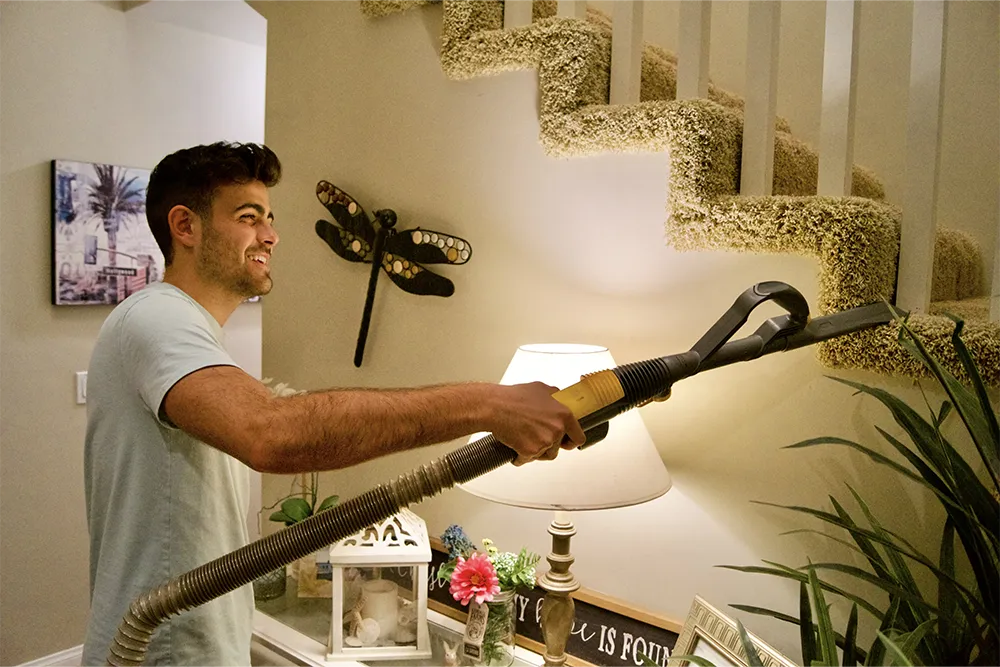
Comece por escolher um aspirador para escadas que se adapte à disposição da sua casa e ao peso que consegue suportar. Muitas pessoas preferem um aspirador leve, uma vez que as escadas exigem que se levante o aparelho e se tenha controlo sobre o mesmo.
Verifique o tipo de aspirador antes de começar:
| Tipo | O que verificar | Porque é importante |
| Aspirador portátil para escadas | Bateria cheia | Tempos de funcionamento curtos interrompem a limpeza |
| Aspirador vertical para escadas | Recipiente removível | Desmontável para um manuseamento mais seguro |
| Aspirador portátil | Mangueiras e ferramentas para espaços apertados | Alcança os bordos e os degraus |
Utilize os acessórios adequados. Use um bocal para fendas nos cantos e um bocal com escova nos degraus alcatifados. Como as escadas têm bordas estreitas, estes acessórios direcionam o fluxo de ar para os locais onde a sujidade se acumula. Para o utilizador, isto significa menos passagens em cada degrau.
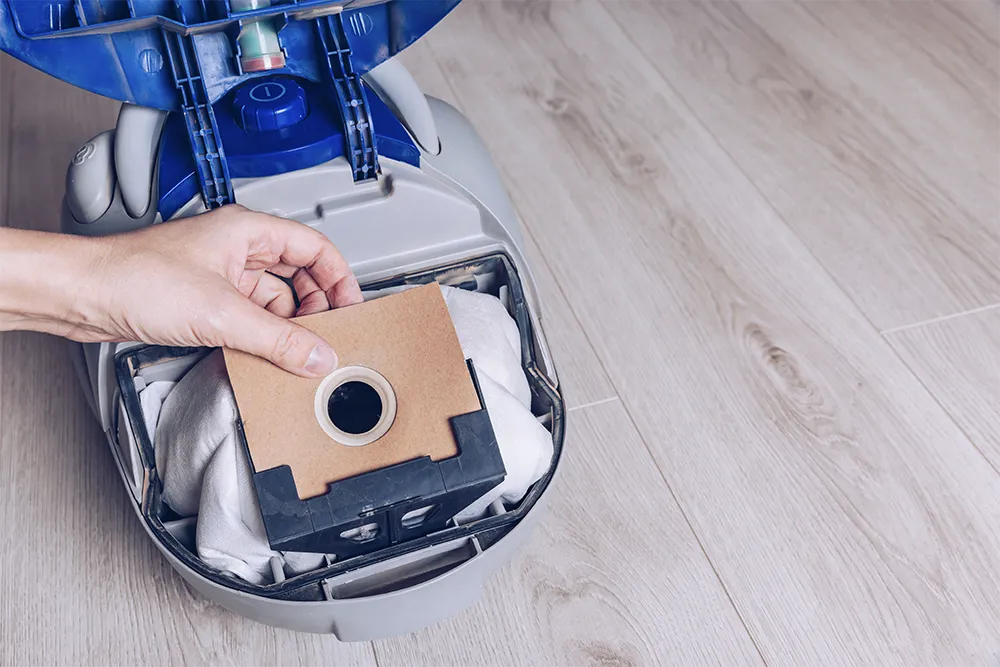
Esvazie o depósito ou troque o saco. Um aspirador sem saco precisa de um depósito vazio, enquanto um aspirador com saco precisa de um saco novo. Os depósitos cheios reduzem o fluxo de ar, o que diminui a capacidade de aspiração.
Se tiver modelos destinados a animais de estimação, como o Bissell Pet Hair Eraser, verifique se há cabelos enrolados na escova. Limpar a escova primeiro mantém a sucção constante e evita que o aparelho pare de funcionar.
Por fim, certifique-se de que os aparelhos estão ligados à corrente. Carregue totalmente os aspiradores sem fio ou coloque os aspiradores com fio ao alcance de uma tomada. Este pequeno passo evita interrupções a meio da limpeza e mantém o seu ritmo constante.
Passo 2: Posicione o aspirador de forma segura
Coloque o aspirador na parte inferior da escada e ligue-o à tomada nesse local. Esta configuração limita folga do cabo nos degraus, o que reduz o risco de tropeçar. Na prática, mantém o cabo atrás de si, em vez de debaixo dos pés.
Fique num degrau estável e vire-se para a escada. Mantenha sempre uma mão perto do corrimão enquanto trabalha. Esta posição proporciona-lhe equilíbrio, uma vez que o seu peso permanece centrado em cada passo.
Se utilizar um aspirador vertical, bloqueie o rolo de escova desligue-o sempre que possível. Um rolo de escova em rotação pode fazer com que o aspirador se desloque para a frente. Para si, isto significa um melhor controlo e menos movimentos bruscos.
Os aspiradores com depósito e os aspiradores verticais funcionam melhor quando a unidade principal fica no chão. Utilize apenas a mangueira e a alça. Isto reduz o peso a levantar, pelo que os braços se cansam menos e mantém-se mais estável.
Escolha anexos antes de começar e mantenha-os à mão:
| Ferramenta | Quando utilizar |
| Bocal para fendas | Bordas estreitas e cantos de escadas |
| Escova para limpar o pó | Degraus e corrimões pintados |
| Acessório de escova / ferramenta multifunções | Pequenos detritos nos degraus de pedra |
| Mini-ferramenta motorizada ou ferramenta para animais de estimação | Degraus alcatifados com cabelos |
| Escova motorizada ou rolo de escova motorizado | Limpeza profunda de alcatifas |
Se o seu aspirador tiver direção giratória, mantenha a cabeça do aspirador na vertical em degraus estreitos. As articulações giratórias são concebidas para rodar facilmente, o que pode fazer com que a cabeça se desvie para o lado. Manter a cabeça do aspirador na vertical evita que este escorregue.
Certifique-se de que o filtro HEPA está bem encaixado antes de começar. Um filtro bem vedado mantém o pó fino dentro do aspirador, para que o ar permaneça mais limpo enquanto trabalha perto dos degraus.
Passo 3: Aspire cada degrau, um de cada vez
Comece pelo degrau mais alto e vá descendo. Esta ordem é importante porque a sujidade solta cai para baixo e você vai recolhendo-a à medida que avança, em vez de ter de voltar a limpar os degraus.
Segure a mangueira ou a vareta com firmeza e limpar um degrau com cuidado antes de passar para a próxima área. Concentre-se no piso, depois no degrau e termine pelas bordas. Na prática, esta abordagem passo a passo evita que os detritos se espalhem.
Utilize a ferramenta adequada para cada superfície:
- Acessório de escova ou escova para limpeza: Solta a sujidade seca nos degraus alcatifados, uma vez que as cerdas levantam as fibras.
- Bocal para fendas: Chega aos cantos mais difíceis e às fendas onde o pó se acumula. Para si, isto significa menos pontos por limpar.
- Ferramenta multifunções: Alterna entre os modos pincel e plano sem trocar de ferramenta.
No caso de escadas com alcatifa, uma mini-escova motorizada, um acessório para animais de estimação ou uma escova motorizada podem ser úteis. Estes acessórios utilizam um rolo de escova motorizado para agitar as fibras da alcatifa, o que permite remover pêlos e resíduos. Se o seu aspirador tiver direção giratória, pode inclinar o acessório para seguir os contornos das escadas com menos esforço no pulso.
Passo 4: Utilize a técnica correta para aspirar rapidamente
Comece pelo degrau mais alto e vá descendo. Esta ordem é importante porque a sujidade solta cai, e assim evita ter de voltar a limpar os degraus que já limpou.
Limpe primeiro os cantos com um bocal para fendas. A sua forma estreita permite alcançar as juntas estreitas onde o piso se une ao degrau, onde se acumula pó e areia. Para si, isto significa menos passagens posteriormente nas superfícies planas.
Para a etapa principal, utilize um acessório de escova ou uma ferramenta combinada. Faça movimentos lentos e retos, pois um movimento constante permite que a sucção arraste os detritos para o fluxo de ar, em vez de os empurrar para o lado.
Em escadas com alcatifa, utilize uma mini-escova motorizada ou uma escova para animais de estimação. Estas escovas utilizam um escova motorizada um rolo giratório que levanta os pêlos das fibras do tapete. Na prática, isto retira os pêlos de animais que ficam incrustados e que a sucção por si só muitas vezes não consegue remover.
No caso de degraus de superfície dura, opte por uma escova para o pó. As cerdas macias recolhem o pó fino sem riscar os acabamentos. Isto é importante em superfícies de madeira ou laminado, onde as escovas duras podem danificar a superfície.
Mantenha o aspirador junto ao corpo. A direção giratória ajuda-o a orientar a cabeça com pequenos movimentos do pulso, o que reduz o esforço e mantém o aparelho na horizontal a cada passo.
Passo 5: Remover a sujidade mais difícil ou os pêlos de animais
Os pêlos de animais e a sujidade acumulada aderem às fibras do tapete porque o tráfego pedonal os empurra para o interior da superfície. São necessárias ferramentas que soltem os resíduos antes que a sucção os remova.
Utilize uma mini-vassoura elétrica ou uma vassoura para animais de estimação com uma escova giratória. As cerdas giratórias agitam as fibras do tapete, uma vez que a escova gira a uma velocidade constante. Na prática, este movimento levanta os pêlos que a sucção por si só deixa para trás, especialmente nos degraus mais estreitos das escadas.
Concentre-se nas bordas e nos cantos com um bocal para fendas. A sua abertura estreita concentra o fluxo de ar num espaço reduzido. Para o utilizador, isto significa que é possível retirar os cabelos presos na junção entre o degrau e a espiga.
Se o cabelo ficar preso no tapete, solte-o primeiro com um acessório de escova ou uma escova para pó. As cerdas curtas e rígidas quebram a ligação entre o cabelo e o tapete. Em seguida, aspire imediatamente para que os resíduos não se depositem novamente.
Tenha a filtragem em mente ao terminar. Um filtro HEPA retém os pêlos finos assim que os levanta. Para si, isto significa que menos partículas voltam para o ar enquanto limpa.
Passo 6: Concluir e fazer a manutenção do seu aspirador
Desligue o aspirador e desligue-o da tomada na base das escadas. Retire todos os acessórios que utilizou, tais como o bocal para fendas, a escova para pó ou o bocal multifunções, e verifique se têm cabelos ou fiapos presos. Limpar estes acessórios agora mantém o fluxo de ar desobstruído na próxima vez que limpar.
Verifique se há cabelos enroscados no rolo da escova ou no rolo motorizado. Corte-os com uma tesoura, pois as fibras emaranhadas diminuem a rotação. Na prática, isto significa que a escova consegue atingir as fibras do tapete, em vez de apenas passar por cima delas.
Esvazie o depósito de pó ou substitua o saco após a limpeza das escadas. As escadas libertam pó fino que pode entupir os filtros. Se o seu aspirador utilizar um filtro HEPA, bata-lhe suavemente ou lave-o, se o fabricante o permitir, e deixe-o secar completamente. Isto ajuda a manter a sucção constante e a reduzir o pó no ar.
Limpe os acessórios, como o acessório para animais de estimação, o mini-acessório motorizado e o acessório de escova. Estes acessórios costumam ser utilizados em bordas e cantos, onde a sujidade se acumula rapidamente. Os acessórios limpos funcionam melhor, pois os resíduos não bloqueiam a entrada de ar.
Antes de guardar o aspirador, verifique as peças móveis. Se o seu aspirador tiver direção giratória, verifique se há areia à volta da articulação e limpe-a. É importante que o movimento seja suave, pois isso garante um controlo estável nas escadas.
Utilize esta lista de verificação rápida após cada trabalho em escadas:
- Lixeira ou saco vazio
- Limpar o rolo da escova
- Limpar as ferramentas
- Verifique o estado do filtro
Dicas para maximizar a eficiência e a segurança na limpeza
Comece por preparar o seu espaço de trabalho antes de aspirar as escadas. Ligue o aspirador na parte inferior da escadaria. Isto evita que os cabos fiquem soltos, o que reduz o risco de tropeçar enquanto sobe degrau a degrau.
Escolha acessórios adequados ao tipo de superfície da escada. Utilize um acessório para alcatifa nos degraus alcatifados e um acessório para pisos duros em degraus de madeira ou azulejo. Na prática, isto evita que o pó se espalhe e reduz a necessidade de passar várias vezes por cada degrau.
Uma haste telescópica aumenta o alcance, uma vez que se estende e fixa em comprimentos pré-definidos. Este design permite-lhe limpar cada degrau mantendo-se em pé. Para si, isto significa um melhor equilíbrio e menos esforço nas costas e nos braços.
Puxe sempre o aspirador na sua direção, em vez de o empurrar para longe. Ao puxá-lo, mantém o peso mais próximo do corpo, o que melhora o controlo. Isto é especialmente importante em degraus estreitos, onde o espaço para os pés é limitado.
Mantenha uma postura estável por razões de segurança:
- Mantenha uma mão no corrimão
- Coloque os dois pés completamente num degrau antes de avançar
- Trabalhe de cima para baixo para evitar que a roupa volte a sujar-se
Deixe as bordas e os cantos para o fim. A sujidade acumula-se nessas zonas porque o tráfego pedonal empurra os detritos para fora. Um bocal estreito ou um acessório com escova permite alcançar essas áreas sem ter de forçar o bocal do aspirador a entrar em ângulos apertados.
Após a limpeza, retire imediatamente o aspirador e o cabo. Escadas desobstruídas reduzem o risco de escorregadelas quando outras pessoas as utilizam.
FAQs
Que precauções de segurança devem ser tomadas ao aspirar as escadas?
Use sapatos com sola de borracha para aumentar a aderência na borda do degrau. Isto reduz o risco de escorregar, uma vez que a borracha aumenta a fricção em alcatifas e superfícies duras.
Mantenha uma mão livre para se equilibrar e coloque o aspirador num degrau estável. Na prática, isto significa que não deve transportar um aspirador vertical de tamanho normal enquanto limpa degraus individuais.
Organize o cabo de alimentação, mantendo-o atrás de si e fora do caminho. Para o utilizador, isto significa menos tropeções e evitar que o cabo se enrole ao descer.
Desligue o aspirador antes de trocar os acessórios ou de o deslocar entre etapas. Isto evita arranques repentinos que possam puxar a mangueira ou o cabo.
Com que frequência se deve aspirar as escadas para garantir uma limpeza ideal?
Aspire as escadas alcatifadas uma vez por semana, se as utilizar diariamente. As fibras do alcatifado retêm o pó e os pêlos dos animais de estimação, pelo que a limpeza semanal limita a acumulação.
Em condições normais de utilização, aspire as escadas de superfície dura a cada duas semanas. A sujidade fica na superfície, pelo que basta uma limpeza menos frequente.
Aumente a frequência da limpeza para duas vezes por semana se tiver animais de estimação ou se houver muito tráfego pedonal. Os pêlos dos animais e a sujidade acumulam-se mais rapidamente nas bordas dos degraus, porque as pessoas giram os pés ao subir e descer as escadas.
É melhor usar um aspirador com fio ou sem fio para limpar as escadas?
Não, nenhuma das duas opções é sempre a melhor. A melhor escolha depende dos limites de peso, do alcance e da duração da limpeza.
Opte por um modelo sem fios se precisar leve e livre circulação. Muitos modelos sem fio têm uma autonomia de cerca de 25 a 55 minutos, o que permite limpar a maioria das escadas sem ter de se preocupar com o fio.
Opte por um aspirador com fio se pretender uma alimentação constante e sessões mais longas. Um aspirador com fio evita as limitações da bateria, o que é útil para limpar vários patamares de uma só vez.
Quer saber mais sobre os nossos produtos?
Ver todos os produtos agora