Como utilizar um cortador de relva elétrico: instruções passo a passo e dicas
Saltar para a secção
Para utilizar um cortador de relva elétrico, basta ligá-lo a uma bateria carregada ou o fio, ajustar a altura de corte, remover os detritos, ativar a alavanca de segurança e cortar a relva em passagens uniformes.
Vais aprender a ligar o cortador de relva, ajustar a altura de corte, preparar o relvado e utilizá-lo com cuidado. Também irá aprender a lidar com relva espessa, a tratar das bordas e a cuidar das lâminas e do armazenamento. As dicas de segurança e as soluções rápidas ajudam-no a evitar problemas comuns e a manter o seu cortador de relva em bom estado de funcionamento.
O que são cortadores de relva elétricos?
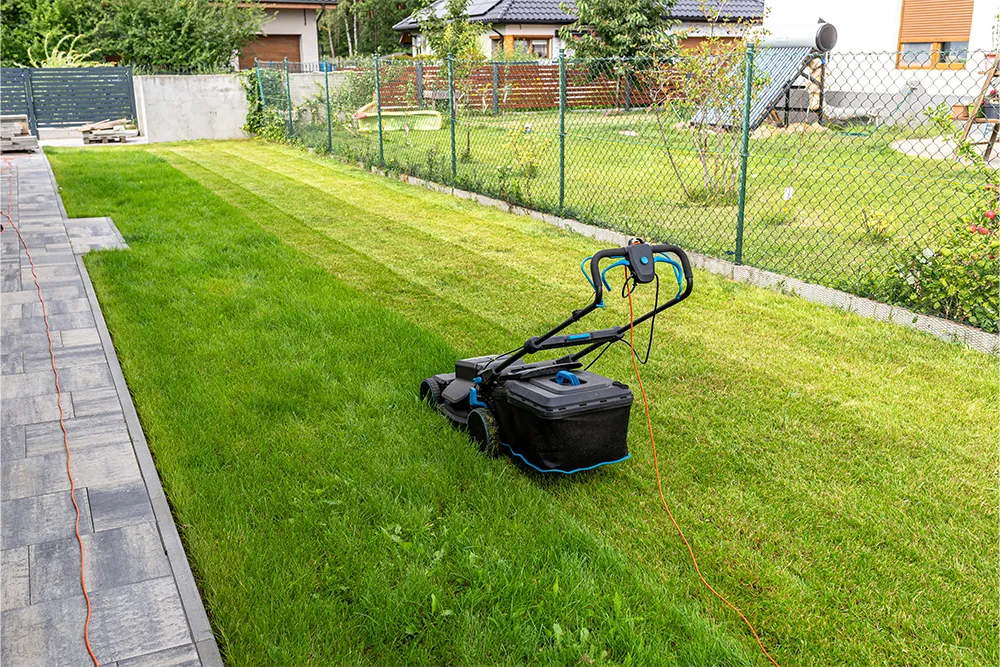
Um cortador de relva elétrico é um cortador de relva que funciona a eletricidade em vez de gasolina. Pode optar por um para reduzir o ruído, diminuir a poluição atmosférica e evitar as tarefas relacionadas com combustível e óleo, sem deixar de satisfazer as necessidades habituais de manutenção do jardim.
Vantagens da utilização de cortadores de relva elétricos:
- Funcionamento ecológico – Os cortadores de relva elétricos não produzem quaisquer emissões, o que os torna uma alternativa mais ecológica aos cortadores a gasolina.
- Desempenho mais silencioso – Funcionam de forma muito mais silenciosa, reduzindo a poluição sonora no seu quintal e na vizinhança.
- Baixa manutenção – Não é preciso preocupar-se com mudanças de óleo, velas de ignição ou combustível; normalmente, basta uma limpeza simples e afiar as lâminas.
Fácil de começar a utilizar – Arranque imediato com um botão ou uma chave de segurança, sem o cordão de arranque dos cortadores de relva tradicionais. - Leve e manobrável – Mais fácil de empurrar e manobrar, especialmente em relvados de pequena a média dimensão ou em espaços apertados.
Tipos de cortadores de relva elétricos
| Tipo | Potência | Ideal para |
| Cortador de relva elétrico com fio | Ponto de venda | Jardins pequenos |
| Cortador de relva elétrico sem fios | Bateria | Jardas médias |
| Robô cortador de relva | Bateria | Ajuste contínuo |
| Cortador de relva com assento | Bateria | Grandes relvados |
Passo 1: Verificar e ligar o cortador de relva elétrico
Um cortador de relva elétrico utiliza um motor ligado à corrente ou alimentado por bateria para fazer girar a lâmina. Antes de ligar o aparelho, certifique-se de que a chave de segurança está no lugar e que todos os bloqueios estão desativados — caso contrário, o cortador não funcionará. Verifique se há tampas soltas, aberturas de ventilação obstruídas ou relva por baixo da plataforma, uma vez que os detritos podem causar o sobreaquecimento do motor.
No caso dos modelos sem fio, carregue totalmente a bateria para evitar que o aparelho desligue a meio do corte. No caso dos modelos com fio, utilize uma extensão adequada para uso no exterior e certifique-se de que a ligação está bem fixa.
Verificação rápida da potência de diferentes cortadores de relva elétricos:
| Tipo de cortador de relva | O que verificar |
| Sem fios | A bateria está bem encaixada e a chave de segurança está inserida |
| Com fio | Ligar o cabo para uso no exterior, alimentado pela tomada |
Passo 2: Ajustar a altura de corte do cortador de relva elétrico
A altura de corte determina a quantidade de relva que a lâmina corta numa única passagem. Para a ajustar:
- Desligue o cortador de relva—retire a bateria nos modelos sem fio ou desligue-os da tomada nos modelos com fio, para evitar que se liguem acidentalmente.
- A maioria dos cortadores de relva permite ajustar a altura através de uma alavanca (para todas as rodas) ou individualmente em cada roda (para cada canto). Certifique-se de que os ajustes são uniformes para obter um corte homogéneo.
Intervalos comuns de altura das lâminas dos cortadores de relva elétricos:
| Cenário | Altura da lâmina |
| Baixo | 1,5–2 polegadas |
| Médio | 2,5–3 polegadas |
| Elevado | 3,5–4 polegadas |
As configurações mais baixas aumentam a resistência, consumindo mais energia, o que pode encurtar duração da bateria em relvados densos. As posições mais altas reduzem a carga do motor e aumentam a autonomia. Verifique sempre a altura antes de cortar a relva e carregue totalmente a bateria para manter um desempenho ideal.
Passo 3: Limpar e preparar o relvado para o cortador de relva elétrico
- Retirar objetos do relvado
Antes de cortar a relva, recolha galhos, pedras, brinquedos e ferramentas de jardim. Estes objetos podem bloquear a lâmina do cortador de relva ou danificá-la, o que pode resultar em cortes irregulares e numa redução do desempenho de corte. - Verificar a humidade da relva
Cortar relva molhada faz com que as lâminas se dobrem e fiquem aglomeradas, o que leva a que fiquem zonas por cortar e a uma descarga ineficaz. Se o relvado estiver húmido, espere que seque ou aumente a altura de corte para lidar com a relva molhada de forma mais eficaz. - Verifique se o solo apresenta irregularidades
Esteja atento a depressões, saliências e raízes expostas. Um terreno irregular pode levantar a plataforma do cortador de relva, causando um corte irregular, mesmo que a lâmina esteja afiada. - Planeie o seu padrão de corte da relva
Escolha um padrão em linha reta que corresponda à largura de corte do seu cortador de relva. Isto reduz a sobreposição e minimiza a perda de tempo durante o corte. - Comece por tratar as áreas problemáticas
Apare as bordas mais espessas ou as zonas mais altas antes de cortar o resto do relvado. Isto ajuda a evitar que o cortador de relva fique atolado e garante uma velocidade constante da lâmina, mantendo um desempenho de corte consistente.
Passo 4: Ligar e utilizar o cortador de relva elétrico
Um cortador de relva elétrico utiliza um motor elétrico alimentado por um cabo ou por uma bateria para fazer girar uma lâmina de corte de aço. Este motor só arranca quando se ativam os controlos de segurança incorporados, o que reduz o risco de movimento acidental da lâmina.
Utilize esta lista de verificação para utilizar o seu cortador de relva elétrico:
- Verificar a fonte de alimentação
- Ativar os controlos de segurança
- Corte a relva em passagens retas e sobrepostas
- Monitorizar o motor e a carga
- Limpar os restos de relva cortada
Antes de começar, verifique o fonte de energia. No caso de um modelo com bateria, insira uma bateria totalmente carregada e fixe-a no lugar. É importante que a bateria esteja totalmente carregada, pois uma autonomia limitada pode reduzir desempenho de corte e obrigá-lo a parar a meio da manobra.
Para ligar o cortador de relva, segure a pega com ambas as mãos, prima o interruptor de segurança e puxe ou empurre o comando de arranque. O motor atinge a velocidade máxima em segundos. Para o utilizador, isto significa que a lâmina corta de forma limpa desde o início, em vez de rasgar as pontas da relva.
Enquanto corta a relva, caminhe a um ritmo constante e sobreponha cada passagem em algumas polegadas. Esta sobreposição melhora o desempenho do corte, uma vez que a lâmina cobre as bordas que não foram cortadas na passagem anterior. Se o ruído do motor diminuir, abrande para reduzir a carga e preservar a vida útil da bateria.
Fique atento à área de descarregamento da relva enquanto trabalha. Se se acumularem restos de relva cortada, pare o cortador e desligue-o da tomada ou retire a bateria antes de limpar os detritos. Este passo contribui para um corte uniforme e reduz a sobrecarga no motor.
Passo 5: Tratar a relva mais espessa e os contornos com o cortador de relva elétrico
A relva espessa refere-se a áreas onde as folhas crescem mais altas e mais densas do que no resto do relvado. Deve abrandar o ritmo ao caminhar nestes locais, pois uma velocidade constante das lâminas melhora o desempenho de corte e reduz o risco de rasgar a relva. Na prática, isto proporciona um corte mais limpo e diminui a carga sobre o motor.
Aumente a altura de corte na primeira passagem por vegetação densa. Esta configuração preserva uma maior área foliar, o que reduz a carga sobre a lâmina e protege a vida útil da bateria. Para si, isto significa menos paragens e um tempo de funcionamento mais longo antes de recarregar.
Sobreponha cada passagem em algumas polegadas, especialmente junto às bordas. A lâmina corta os fios que não foram cortados na segunda passagem, uma vez que a sobreposição mantém a relva na vertical e dentro do percurso de corte. Utilize a parte lateral do cortador para aparar junto a passeios e entradas de garagem, mas mantenha a plataforma nivelada para evitar cortar a relva em demasia.
Dicas para a utilização da bateria em relva alta
| Ação | Porque é importante | O que significa para si |
| Cortar relva seca | As lâminas molhadas ficam coladas umas às outras | Maior autonomia da bateria |
| Mantenha uma velocidade constante | Evita picos de tensão | Corte mais uniforme |
| Carregar completamente | A bateria fornece a potência nominal | Potência constante |
Passo 6: Desligar, limpar e guardar o cortador de relva elétrico
Desligar o cortador de relva implica parar o motor e interromper toda a corrente elétrica antes de o manusear. Solte o botão de arranque, aguarde até que a lâmina pare e, em seguida, retire a bateria ou desligue o cabo da tomada para evitar arranques acidentais.
A limpeza do cortador de relva consiste em remover a relva, a sujidade e a humidade da plataforma, da zona das lâminas e das rodas, utilizando uma escova seca ou um pano. Evite pulverizar água sobre a caixa do motor ou o compartimento da bateria, uma vez que a humidade pode causar corrosão e reduzir a vida útil da bateria. Verifique se a lâmina está direita e afiada para garantir cortes limpos, reduzir a tensão no motor e manter o seu relvado saudável.
Guarde o cortador de relva num local seco e coberto e mantenha a bateria no interior, a uma temperatura entre 40 °F e 80 °F, para preservar a sua carga e prolongar a sua vida útil. A limpeza regular e o armazenamento adequado ajudam a manter um desempenho de corte consistente e garantem que o cortador de relva está pronto a ser utilizado na sua próxima sessão de corte.
Lista de verificação rápida para o armazenamento:
- Desligue o aparelho e desligue-o da rede elétrica
- Limpe a plataforma, a lâmina e as rodas
- Seque todas as superfícies
- Guarde o cortador de relva e a bateria separadamente
Resolução de problemas e dicas de segurança para cortadores de relva elétricos
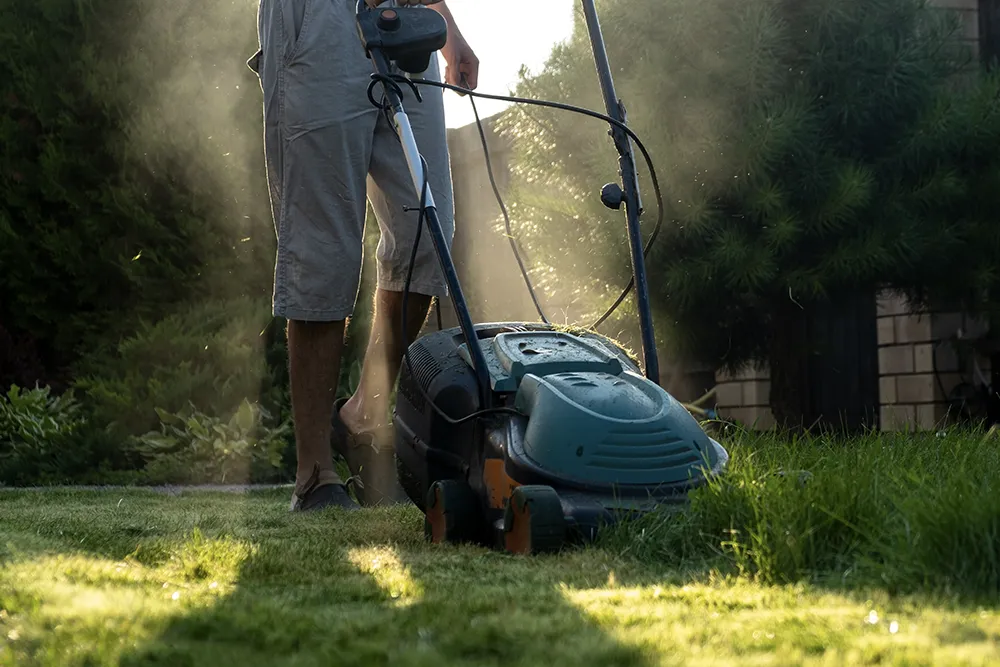
A resolução de problemas num cortador de relva elétrico consiste em identificar e resolver problemas comuns que afetam a potência, o corte ou a utilização segura. Estas verificações servem para manter o cortador a funcionar conforme previsto e para reduzir o risco de lesões.
Os problemas com a bateria são a causa da maioria dos problemas de arranque. As baterias de iões de lítio incluem uma placa de controlo que interrompe a alimentação quando a tensão desce demasiado. Devido a esta conceção, um cortador de relva pode não arrancar, mesmo quando a bateria apresenta alguma carga. Para si, isto significa que deve carregar totalmente a bateria e deixá-la arrefecer durante 30 minutos antes de a voltar a utilizar.
A tabela de potência pode indicar-lhe o que fazer:
| Problema | Causa provável | O que fazes |
| O cortador de relva não arranca | A bateria está demasiado quente ou descarregada | Carregue completamente e deixe arrefecer |
| Tempo de execução curto | Células de bateria a frio | Aquecer a bateria em ambiente interior |
| Sem energia | Chave de segurança removida | Insira a chave com firmeza |
O desempenho de corte depende de estado da lâmina e a altura do deck. As lâminas de aço ficam cegas após o contacto com areia ou galhos. Quando as arestas ficam arredondadas, a lâmina arranca a relva em vez de a cortar. Para si, isto significa relva irregular e uma maior carga no motor. Afie ou substitua a lâmina e ajuste o prato de corte de acordo com o tipo de relva.
A segurança é fundamental sempre que se aprende a utilizar um cortador de relva elétrico. Os motores elétricos arrancam rapidamente porque fornecem binário logo à velocidade zero. Na prática, isto significa que deve manter as mãos afastadas da plataforma de corte e retirar a bateria antes de efetuar quaisquer verificações.
- Use sapatos fechados e proteção ocular
- Corte a relva seca para evitar escorregadelas e entupimentos
- Desligue da tomada ou retire a bateria antes de resolver os encravamentos
FAQs
Quais são os requisitos de manutenção de um cortador de relva elétrico?
Os cuidados de manutenção de um cortador de relva elétrico incluem a limpeza dos resíduos de relva, o afiamento da lâmina de aço e o armazenamento da bateria de iões de lítio num local seco.
É necessário limpar os resíduos de relva acumulados no deck após cada utilização, uma vez que os resíduos secos bloqueiam o fluxo de ar. Na prática, isto ajuda o motor a manter-se fresco e a cortar de forma uniforme.
Deve afiar a lâmina de aço pelo menos uma vez por época. Uma lâmina afiada corta a relva de forma limpa, o que reduz a pressão sobre o motor e evita que as pontas da relva fiquem castanhas.
Se utilizar um modelo com bateria, guarde a bateria de iões de lítio num local seco, a uma temperatura entre 40 °F e 80 °F. Para si, isto significa uma maior duração da bateria e menos problemas de carregamento.
Quais são as desvantagens de um cortador de relva elétrico?
As desvantagens de um cortador de relva elétrico incluem o tempo de funcionamento limitado, a restrição de movimentos e o facto de produzirem menos binário do que os motores a gasolina
Um cortador de relva elétrico funciona com um cabo de alimentação ou com uma bateria, o que limita o tempo de funcionamento. Os modelos a bateria costumam funcionar entre 30 e 60 minutos por carga, pelo que os jardins de grandes dimensões podem necessitar de uma segunda bateria.
Os modelos com fio limitam a liberdade de movimentos, uma vez que o cortador de relva tem de permanecer ligado a uma tomada. Isto significa que tem de planear o percurso de corte para evitar cortar o fio.
Os motores elétricos também produzem menos binário do que os motores a gasolina. Devido a esta característica de conceção, a relva espessa ou demasiado crescida pode exigir passagens mais lentas ou uma altura de corte mais elevada.
Quer saber mais sobre os nossos produtos?
Ver todos os produtos agora