Lista de comprobación para el mantenimiento de cortacéspedes: pasos esenciales para que el equipo funcione correctamente
Saltar a la sección
Un cortacésped necesita un mantenimiento regular para funcionar correctamente y durar más tiempo. Una lista de comprobación para el mantenimiento del cortacésped ayuda a los usuarios a llevar un control de los cambios de aceite, el afilado de las cuchillas, la limpieza del filtro de aire y otras tareas que garantizan el buen funcionamiento del cortacésped durante todo el año. Sin este mantenimiento rutinario, los cortacéspedes pierden potencia, cortan de forma irregular y se averían con mayor frecuencia.
La mayoría de los problemas de las cortadoras de césped se deben a un mantenimiento descuidado. El aceite sucio daña el motor. Las cuchillas desafiladas arrancan la hierba en lugar de cortarla limpiamente. Los filtros de aire obstruidos reducen la potencia y desperdician combustible.
Esta guía explica qué hay que comprobar antes de cada uso, qué tareas hay que realizar en cada estación del año y en qué se diferencia el mantenimiento de los cortacéspedes de gasolina del de los cortacéspedes a batería. Además, explica cómo utilizar una lista de comprobación de mantenimiento para evitar reparaciones costosas y prolongar la vida útil del cortacésped.
¿Qué es una lista de comprobación para el mantenimiento de un cortacésped?
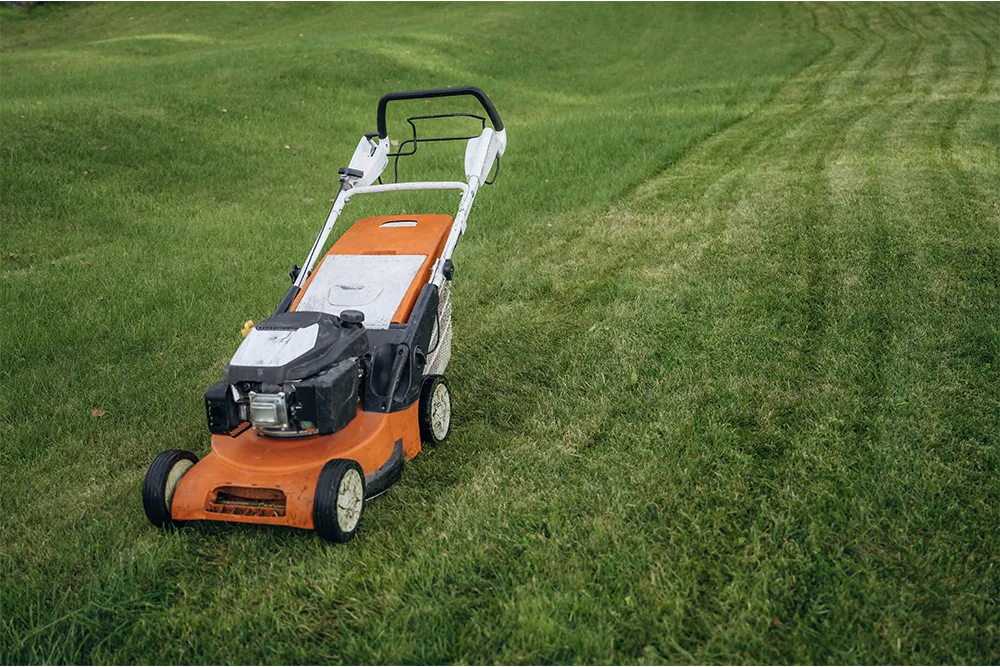
Una lista de comprobación para el mantenimiento de un cortacésped es un listado estructurado de tareas que se realizan a intervalos específicos para garantizar el buen funcionamiento del cortacésped. Incluye las inspecciones, la limpieza, la sustitución de piezas y los ajustes necesarios a lo largo del año.
Definición de mantenimiento de cortacéspedes
El mantenimiento de un cortacésped consiste en los cuidados y revisiones periódicas necesarios para que el aparato funcione al máximo rendimiento. Incluye tareas como comprobar los niveles de aceite, afilar las cuchillas, limpiar los filtros de aire e inspeccionar las bujías.
Las principales tareas de mantenimiento incluyen:
- Revisiones semanales — Retira los restos de césped de la plataforma, comprueba que las cuchillas no estén dañadas y revisa la presión de los neumáticos
- Tareas mensuales — Cambiar o limpiar los filtros de aire, comprobar los niveles de aceite y apretar los tornillos sueltos
- Trabajo estacional — Cambiar las bujías, cambiar el aceite, afilar o sustituir las cuchillas, vaciar el depósito de combustible para el almacenamiento invernal
Un mantenimiento adecuado del cortacésped evita averías durante la temporada de siega. Reduce los costes de reparación al detectar pequeños problemas antes de que se conviertan en averías costosas. Además, el mantenimiento periódico alarga la vida útil del cortacésped varios años en comparación con los equipos descuidados.
La lista de comprobación organiza estas tareas por frecuencia. Las tareas semanales solo llevan unos minutos. El mantenimiento mensual requiere aproximadamente media hora. Las revisiones estacionales necesitan entre una y dos horas, pero solo se realizan unas pocas veces al año.
¿Qué hay que comprobar antes y después de cada uso del cortacésped?
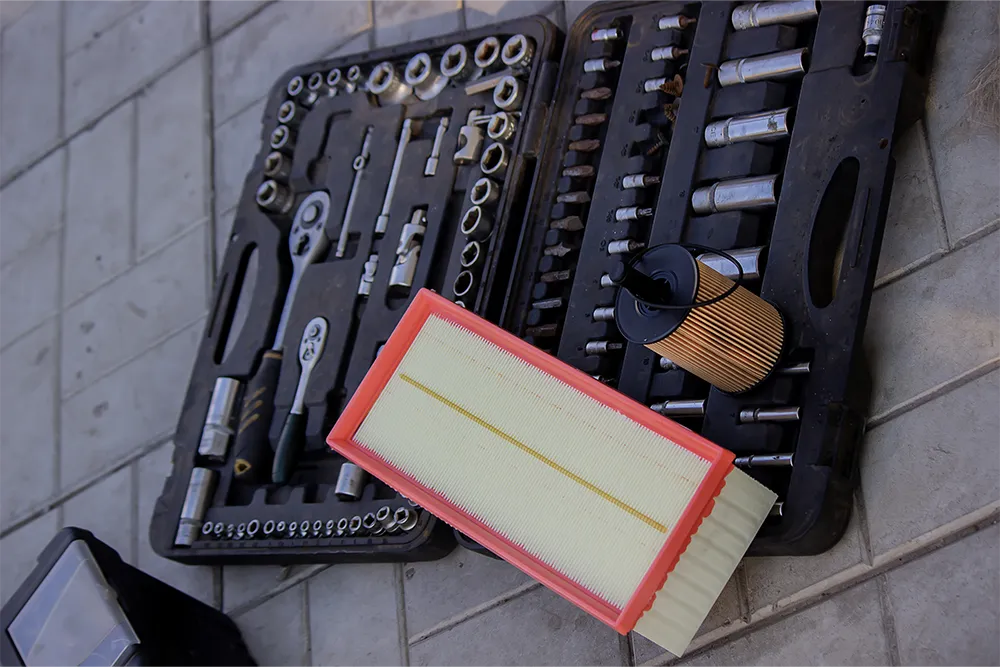
Antes de poner en marcha el cortacésped, se debe comprobar el nivel de aceite, el estado de las cuchillas y los dispositivos de seguridad. Una vez finalizado el corte, se deben retirar los restos de hierba de la plataforma y se deben inspeccionar todos los tornillos y piezas.
Lista de comprobación para el mantenimiento diario del cortacésped
Antes de cada uso:
Comprueba el nivel de aceite con la varilla. El aceite debe llegar hasta la marca de «máximo» y tener un aspecto limpio. Si el aceite está oscuro o tiene sedimentos, hay que cambiarlo.
Comprueba que la cuchilla no presente grietas, astillas ni esté demasiado desafilada. Una cuchilla dañada provoca cortes irregulares y supone un riesgo para la seguridad.
Comprueba la presión de los neumáticos de los cortacéspedes con ruedas. La mayoría de los neumáticos de cortacéspedes requieren una presión de entre 10 y 14 PSI. Una presión desigual en los neumáticos provoca que el césped quede pelado y una mala calidad de corte.
Comprueba que el filtro de aire esté limpio y libre de residuos. Un filtro obstruido reduce el rendimiento del motor y aumenta el consumo de combustible.
Los engrasadores de los cortacéspedes con ruedas deben lubricarse cada 25 horas de uso. Presta especial atención a los ejes de las ruedas, los componentes de la dirección y los puntos de articulación de la plataforma.
Después de cada uso:
Retira los restos de hierba de la plataforma, el motor y los bajos. La acumulación de residuos retiene la humedad y acelera la aparición de óxido.
Compruebe si las correas y los cables presentan signos de desgaste o deshilachamiento. Sustituya cualquier componente dañado antes del próximo uso.
Comprueba si hay tornillos sueltos, sobre todo en la cuchilla y la plataforma. Las vibraciones durante el funcionamiento pueden aflojar los tornillos con el paso del tiempo.
¿Qué tareas de mantenimiento estacional del cortacésped deben incluirse?
Los cortacéspedes requieren cuidados diferentes en primavera, a mitad de temporada y en otoño. Hacerlo en el momento adecuado evita averías y garantiza que el cortacésped funcione durante años.
Tareas de primavera (prepárate para la temporada)
- Cambia el aceite del motor y el filtro de aceite para eliminar cualquier residuo del invierno
- Cambia la bujía para que el cortacésped arranque a la primera
- Limpia o cambia el filtro de aire para restablecer el flujo de aire completo
- Afila o cambia la cuchilla para conseguir cortes limpios que mantengan el césped sano
- Comprueba la presión de los neumáticos de los cortacéspedes con ruedas para mantener una altura de corte uniforme
Tareas de mitad de temporada (mantén el corte limpio)
- Limpia la parte inferior de la terraza para evitar que se acumule la hierba
- Revisa el desgaste de las correas y los cables antes de que se rompan
- Vuelve a afilar la cuchilla tras unas 25 horas de uso
Tareas de otoño (preparación para el almacenamiento)
- Añade estabilizador de combustible al depósito para mantenerlo en buen estado
- Deja el motor en marcha hasta que el sistema de combustible se seque para evitar que el carburador se obstruya
- Cambie el aceite para eliminar la humedad y los ácidos antes de guardarlo
- Retira la batería de los cortacéspedes inalámbricos para evitar daños causados por el frío
- Limpia bien el cortacésped y cúbrelo para evitar que se oxide y que se le metan bichos
¿En qué se diferencia el mantenimiento de los cortacéspedes inalámbricos del de los modelos de gasolina?
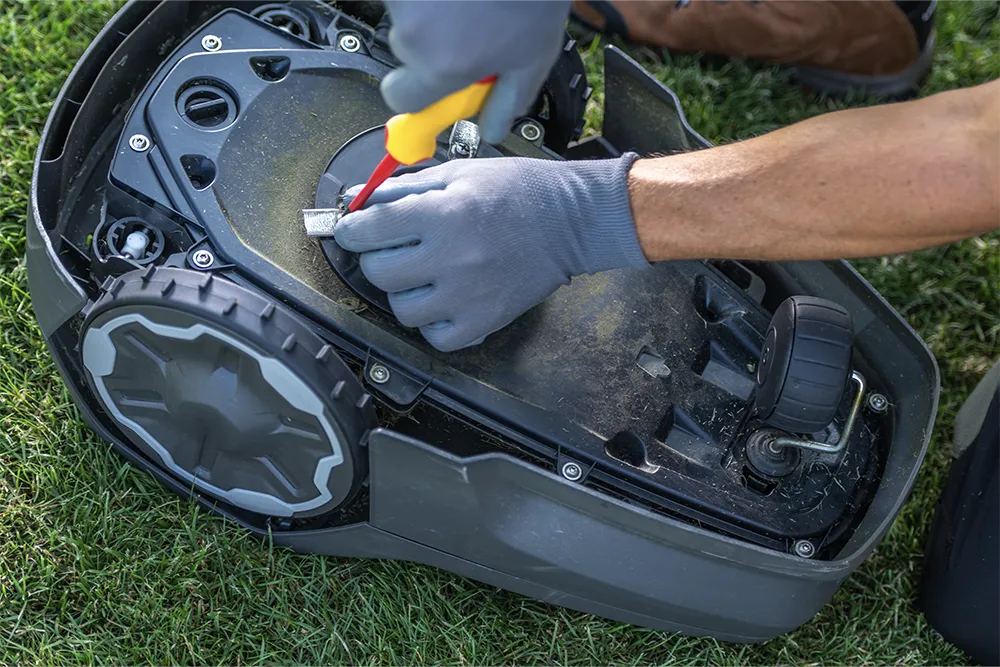
Los cortacéspedes inalámbricos requieren cuidados de la batería y mantenimiento del cargador, mientras que los cortacéspedes de gasolina necesitan revisión del motor y mantenimiento del sistema de combustible. Ambos tipos requieren afilar las cuchillas y limpiar la plataforma.
Comparación entre el mantenimiento de cortacéspedes inalámbricos y de gasolina
Los cortacéspedes inalámbricos tienen menos piezas móviles que los modelos de gasolina. Esto reduce el trabajo de mantenimiento.
Los cortacéspedes de gasolina requieren cambios de aceite, sustitución del filtro de aire y revisión de las bujías una vez por temporada. Además, necesitan un mantenimiento del sistema de combustible antes de guardarlos durante el invierno. Los cortacéspedes inalámbricos prescinden de todas las tareas de mantenimiento relacionadas con el combustible y el motor.
Ambos tipos de cortacésped requieren un afilado de las cuchillas dos veces por temporada. La limpieza de la plataforma es necesaria en ambos modelos después de cada uso para evitar la acumulación de hierba. El mantenimiento de las ruedas y la comprobación del ajuste de la altura son necesarios en ambos tipos.
Tareas de mantenimiento según el tipo de cortacésped:
| Tarea | Sin cables | Gasolina |
| Afilado de cuchillas | Obligatorio | Obligatorio |
| Cambios de aceite | No es necesario | Obligatorio |
| Limpieza del filtro de aire | No es necesario | Obligatorio |
| Cuidado de la batería | Obligatorio | No es necesario |
| Sustitución de las bujías | No es necesario | Obligatorio |
| Mantenimiento del sistema de combustible | No es necesario | Obligatorio |
Cuidado de la batería y el cargador de los cortacéspedes inalámbricos
Retira la batería antes de realizar cualquier tarea de mantenimiento en un cortacésped inalámbrico. De este modo, se evitan arranques accidentales y se protege la batería contra posibles daños. Los cortacéspedes de Titantec de 20 V, 40 V y 60 V utilizan baterías de iones de litio extraíbles diseñadas para poder retirarlas sin necesidad de herramientas.
Guarde las baterías en un lugar fresco y seco, lejos de temperaturas extremas. Las temperaturas superiores a 32 °C (90 °F) deterioran las celdas de la batería y reducen su capacidad. Las temperaturas inferiores a 0 °C (32 °F) ralentizan las reacciones químicas y disminuyen la autonomía.
Cargue las baterías después de cada uso para mantener su rendimiento. Descargue completamente la batería cada 30 días para recalibrar el indicador de carga. Sustituya las baterías cuando la autonomía sea inferior a la mitad de la capacidad original. A modo de referencia, la batería sin escobillas de 40 V y 4,0 Ah de Titantec ofrece aproximadamente 45 minutos de autonomía con carga cuando es nueva.
Revisa mensualmente las conexiones del cargador para detectar posibles signos de corrosión o daños. Limpia los contactos del cargador con un paño seco. Sustituye los cargadores que muestren signos de sobrecalentamiento o que emitan ruidos extraños durante la carga.
Cuidado del motor y del combustible para cortacéspedes de gasolina
Cambie las bujías una vez por temporada o tras 100 horas de uso. Las bujías desgastadas dificultan el arranque y reducen la potencia del motor. Sustituya las bujías que presenten desgaste en los electrodos o acumulación de carbonilla.
Limpia los filtros de aire cada 25 horas de funcionamiento. Los filtros sucios limitan el flujo de aire y aumentan el consumo de combustible. Sustituye los filtros de papel una vez al año o tras 100 horas de corte, lo que ocurra primero.
Cambie el aceite cada 50 horas de funcionamiento o una vez por temporada. Compruebe los niveles de aceite antes de cada uso y añada aceite cuando sea necesario. Utilice aceite SAE 30 para temperaturas superiores a 40 °F o 10W-30 para condiciones variables. Las cortadoras de césped a gasolina de Titantec que utilizan motores Loncin de 125 cc a 196 cc tienen un depósito de aceite de 1 l.
Añade estabilizador de combustible a la gasolina antes de guardar el vehículo durante el invierno. Vacíe completamente el sistema de combustible o deja que el motor funcione hasta que se quede sin combustible para evitar que el carburador se pegue. La gasolina se degrada al cabo de 30 días y forma depósitos que obstruyen los conductos de combustible.
¿Cómo utilizar una lista de comprobación para el mantenimiento del cortacésped y obtener un mejor rendimiento?
Una lista de comprobación para el mantenimiento del cortacésped permite llevar un control de las tareas necesarias y evita averías en el equipo. Seguir un programa estructurado alarga la vida útil del cortacésped y mantiene la calidad del corte.
Lista de comprobación final para el mantenimiento del cortacésped
Una lista de comprobación para el mantenimiento del cortacésped organiza las tareas según su frecuencia e importancia. Las tareas diarias incluyen comprobar los niveles de aceite y retirar los restos de hierba de la plataforma y los bajos. El mantenimiento semanal requiere inspeccionar las cuchillas para detectar posibles daños o si están desafiladas.
Las tareas mensuales incluyen la limpieza del filtro de aire, la revisión de las bujías y la comprobación de la presión de los neumáticos. El sistema de combustible requiere un mantenimiento cada 30 días para evitar atascos y problemas de arranque.
El mantenimiento estacional requiere un trabajo más intensivo. Los preparativos de primavera incluyen el cambio de aceite, el afilado de las cuchillas y el repostaje de combustible nuevo. La preparación para el invierno en otoño consiste en aplicar un estabilizador de combustible, retirar la batería para su almacenamiento y limpiar a fondo todos los componentes.
Las tareas anuales pueden requerir la intervención de un profesional. Cambie las bujías cada 100 horas de funcionamiento o una vez al año. Afile las cuchillas del cortacésped entre 2 y 3 veces por temporada, dependiendo del tamaño del jardín y del tipo de césped.
Errores habituales en el mantenimiento de cortacéspedes que hay que evitar
No realizar los cambios de aceite es un error de mantenimiento que puede causar daños. El aceite sucio provoca el desgaste del motor y su sobrecalentamiento. Comprueba el nivel de aceite antes de cada uso y cámbialo cada 50 horas de funcionamiento o una vez al año.
El uso de cuchillas desafiladas desgarra el césped en lugar de cortarlo limpiamente. Esto provoca que las puntas se pongan marrones y se dañen, y aumenta el riesgo de enfermedades. Afila las cuchillas del cortacésped cada 25 horas de uso o cuando el césped presente un aspecto irregular tras el corte.
Si no se limpia el filtro de aire, se reduce la potencia del motor y el rendimiento del combustible. Limpie los filtros cada 25 horas y sustituya los filtros de papel tras 100 horas o una vez al año, lo que ocurra primero.
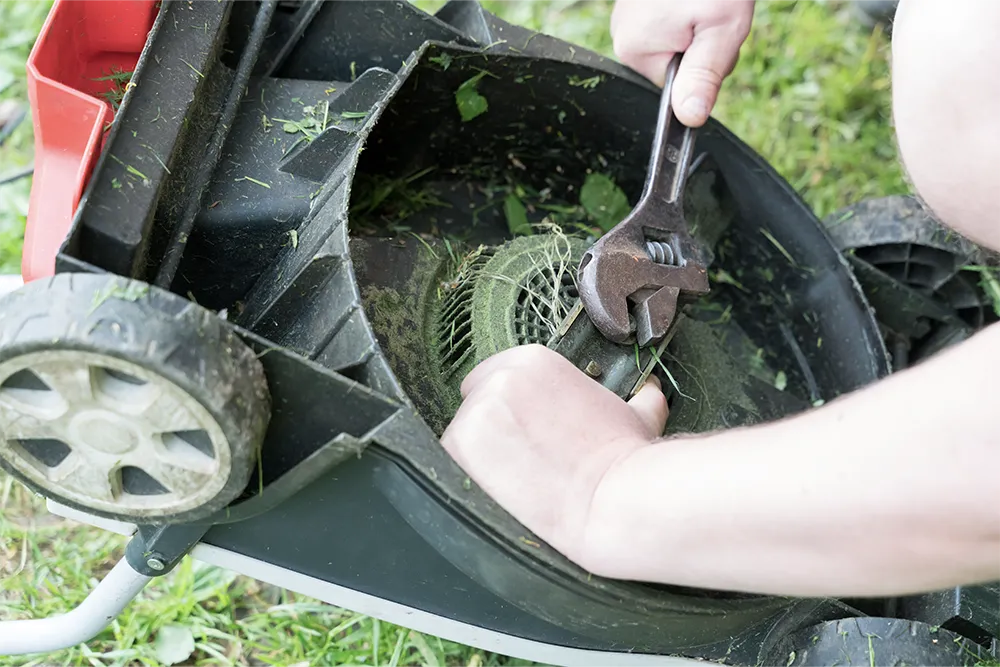
Si no se limpia la plataforma, se acumula hierba que retiene la humedad y provoca óxido. Raspa la parte inferior cada 2 o 3 usos para evitar la corrosión y mantener un flujo de aire adecuado que permita un corte uniforme.
Preguntas frecuentes
¿Qué mantenimiento rutinario hay que realizar en un cortacésped para que funcione correctamente?
Compruebe el nivel de aceite antes de cada uso. Limpie el filtro de aire cada 25 horas. Cambie el aceite del motor cada 50 horas o una vez por temporada. Sustituya la bujía una vez al año. Afile la cuchilla cada 25 horas. Limpie debajo de la plataforma después de cada uso. Compruebe la presión de los neumáticos una vez al mes. Revise las correas y los cables al comienzo de cada temporada.
¿Cuáles son las principales diferencias en cuanto al mantenimiento entre un cortacésped autopropulsado y uno manual?
Las cortadoras de césped autopropulsadas tienen una correa de transmisión que hay que revisar cada 1 o 2 años; las cortadoras manuales suelen tener solo un cable de la cuchilla. Los modelos autopropulsados de gasolina tienen depósitos de combustible más grandes y, a menudo, un filtro de combustible que hay que sustituir anualmente. Los modelos inalámbricos siguen la misma rutina con la batería: cargar, guardar en un lugar fresco y vigilar el tiempo de funcionamiento. Ambos tipos requieren el mismo afilado de cuchillas, limpieza del filtro de aire y cambios de aceite (en los modelos de gasolina).
¿Cuál es la forma más segura de limpiar y afilar las cuchillas del cortacésped, y con qué frecuencia se debe hacer?
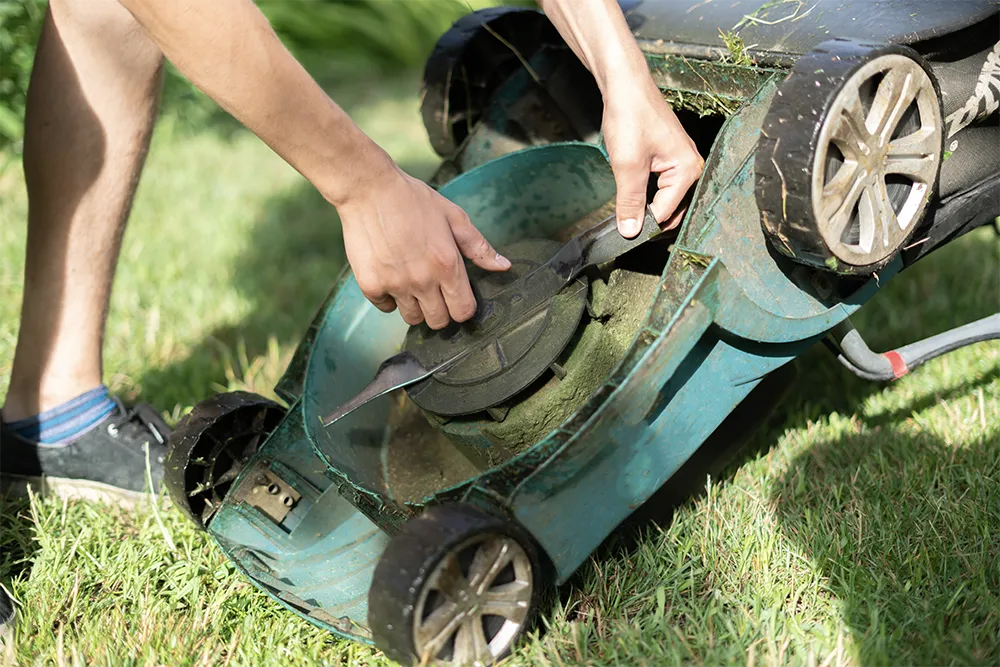
Desconecta primero el cable de la bujía o retira la batería. Utiliza guantes de cuero. Desmonta la cuchilla con una llave de vaso y marca la parte inferior con pintura para volver a colocarla en la posición correcta. Sujétala en un tornillo de banco y lima el filo en un ángulo de 45 grados con una lima de fresado de 25 cm, dando pasadas iguales a cada lado. Compruebe el equilibrio colgando la cuchilla de un clavo: debe quedar nivelada. Afílela cada 25 horas de corte o cuando la hierba parezca deshilachada. Sustituya la cuchilla si está agrietada o desgastada.
¿Quiere saber más sobre nuestros productos?
Ver todos los productos